


With the process of Chikankari in mind, it is only natural to consider what gives this process its strength and continuity: the stitches. These stitches are not only aesthetic decisions based on visual appeal; they are practical decisions that have been influenced by years of wear and tear, as well as environmental conditions.
Each stitch has a different effect on fabric, some giving it structure, some giving it softness, and some giving it breathability, and all of these work together, to create an embroidery that is both functional and beautiful.
Chikankari Fabrics are Crafted to Last
Most trends are designed for a single season but Chikankari is crafted to last. The embroidery employs traditional stitches that follow the same craft over the years not because they won’t change, but because they are effective. The stitches are also light on the fabric. This ensures that the clothes are comfortable and durable.
As the fabric is worn and washed, it becomes softer and takes the shape of the wearer’s body, thus providing a familiarity with the garment. The fact that Chikankari fabrics can age so well, makes it a very practical and important form of fashion while providing a long-term alternative to fast fashion, which goes out of shape in weeks.
32 Types of Hand-Embroidery Stitches
Chikankari features a rich vocabulary of hand-embroidery stitches that give the craft its depth and delicacy. Some of the most widely used stitches include Tepchi, Bakhiya (both sidha and ulta shadow work), Hool, Zanzeera, Rahet, Banarsi, Khatau, Phanda, Murri, and Jaali, along with Jora, Keel Kangan, Pechni, Karan, Ghaspatti, Bijli, Makra, Sidhaul, and Daraz. Decorative and regional variations such as Kangan, Dhania Patti, Sazi, Gitti, Kapkapi, and Maharki further enrich the repertoire, while stitches like Rumaal, Hathkati, Hathi Pair, Zanjeer Murri, and Kanta reflect the technical depth of the craft.
Among these, here are 5 commonly used stitches:
Tepchi: The Quiet Framework
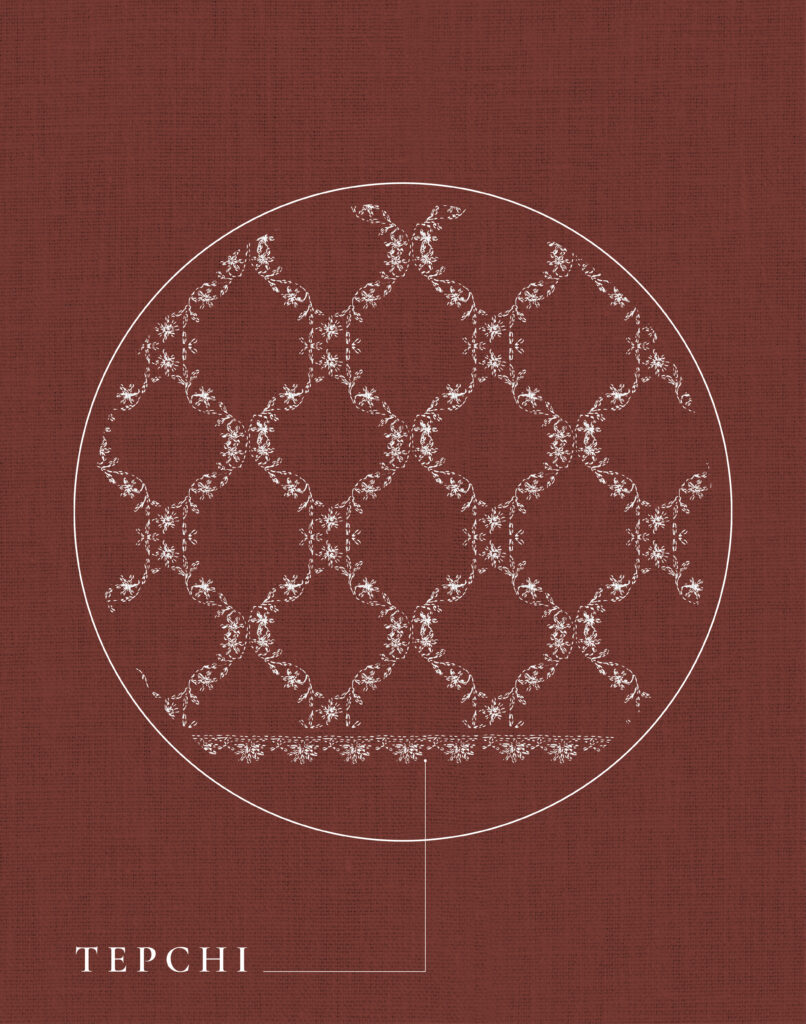
Tepchi is usually the first stitch that provides foundation to many designs, created through Chikankari. This stitch is a long, even running stitch that is created with consistency and control, often outlining patterns or filling in a larger area that will eventually be used to support more intricate stitches.
While it is not a particularly showy stitch, it is the key to the overall clarity and balance of the design. Its relevance lies in its restraint. Tepchi defines without weighing down the fabric, thus allowing it to retain its natural flow and feel.
In modern fashion, where fluid silhouettes and comfort are paramount, this stitch ensures that the embroidery does not make the fabric stiff. Tepchi is also a stabilizer, which helps in keeping complex stitches in line, adding to the overall longevity of the garment.
Bakhiya: Depth without Weight
Bakhiya, also known as shadow work, is done on the back of the fabric so that the stitches are subtly visible on the other side. This stitch gives Chikankari its characteristic subtle look. Bakhiya is best done on very thin fabrics that allow light to pass through the threads.
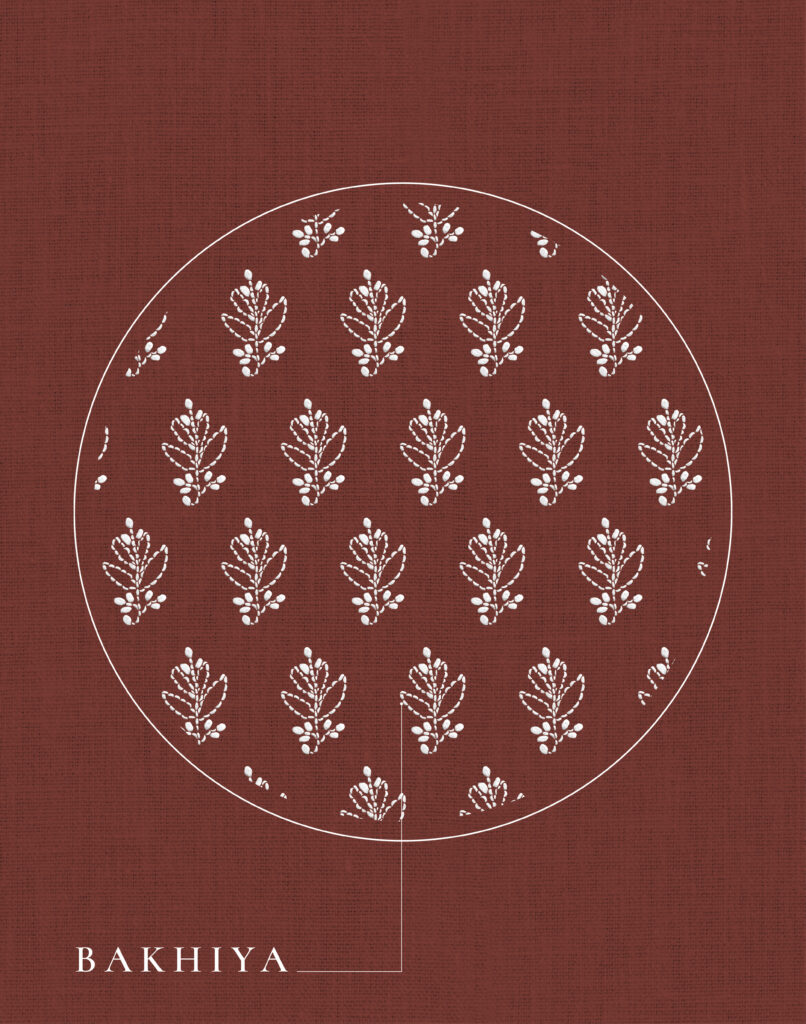
What is most remarkable about Bakhiya is that it strikes a perfect balance between visibility and comfort. Since the embroidery is done on the back of the fabric & embedded into it, the fabric remains smooth to feel when it’s worn. In modern fashion, where subtlety and minimalism are paramount, Bakhiya is absolutely relevant.
Phanda: Controlled Texture
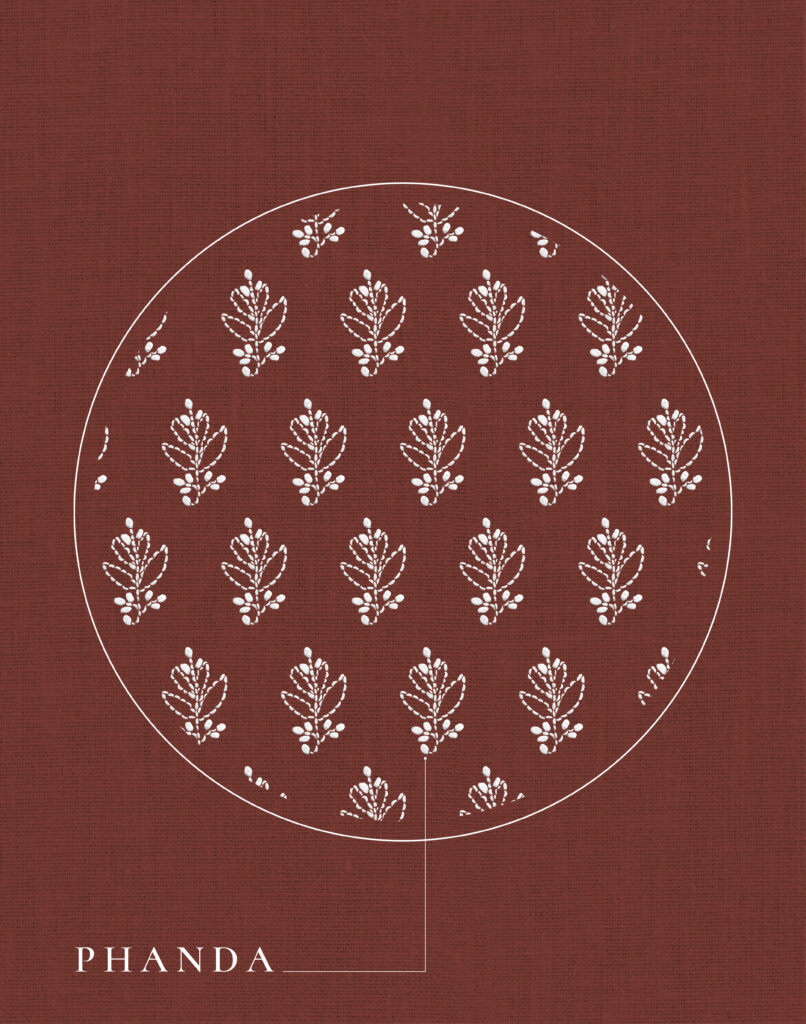
Phanda is a small knotted stitch that creates dot-like details, which can look like a flower bud or center. Although small, it must be sewn exactly the same way each time, so that they look the same size and shape on the finished piece. A small difference in the way the stitches are made will show up as an inconsistency; therefore, the Phanda requires a very skilled hand.
This stitch is moderate in its strength. Phanda adds texture to the fabric without taking away from the softness of the fabric. When used in moderation, Phanda will create a flow and add dimension to a design, and will lead the eye to the design without overloading it. In contemporary fashion, where there is a lot of embellishment, Phanda shows how little texture can create a lot of depth in a design.
Murri: Precision in Relief
Murri is an elongated version of Phanda, with a look similar to that of grain rice. Murri is denser than Phanda and, therefore, will need more care and precision when wrapping the thread around it to maintain the integrity of the stitch as well as being consistent.
Murri stitches take longer to complete and require more control than other types of stitches making this stitch one of the technically most challenging components of Chikankari. Its ability to remain intact over time makes it especially suitable for garments intended for regular use. Murri proves that intricate handwork can be both decorative and durable, a quality that remains highly relevant in modern wardrobes.
Jaali: Engineering Breathability
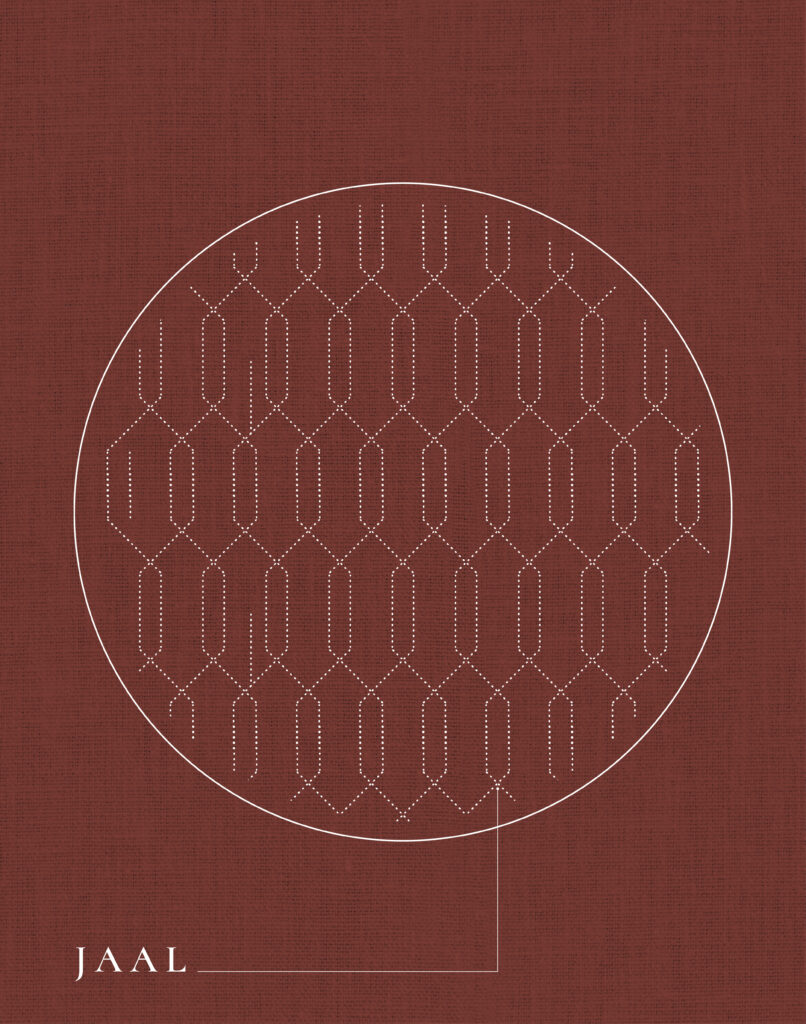
Jaali is among the most complex Chikankari work techniques, involving the careful separation of fabric threads to create a net-like pattern without cutting the cloth. The process requires intense concentration, as even slight errors can weaken the fabric. When executed correctly, the result is a delicate lattice that allows air and light to pass through naturally.
Jaali is not merely ornamental; it alters how the garment functions. By increasing airflow, it enhances comfort, particularly in warm climates.
Long before breathability became a design feature, Jaali addressed it through technique. In today’s fashion landscape, where comfort and performance are increasingly valued, Jaali stands as an example of how traditional knowledge often anticipates modern needs.
Why These Stitches Continue to Matter
These stitches have endured because they respond intelligently to fabric and wear. They move with the textile instead of resisting it, becoming softer and more integrated over time. Rather than deteriorating, they settle into the garment, reinforcing its structure while maintaining comfort.
In contrast to decorative embroidery that prioritises surface impact, Chikankari fabric stitches work at a deeper level. They balance beauty with function, ensuring garments remain wearable across seasons and years.
This performance-driven approach is what allows Chikankari fabric to remain relevant without constant reinvention.
Stitch by Stitch, the Craft Moves Forward
Chikankari’s relevance is sustained not through trend alignment, but through the continued effectiveness of its stitches. Tepchi, Bakhiya, Phanda, Murri, and Jaali were refined through use, not theory, and that practicality is what allows them to adapt seamlessly to modern silhouettes.
By understanding these stitches, one sees Chikankari work not as a decorative tradition, but as a living system of knowledge. Each stitch carries intention, experience, and function – qualities that ensure the craft remains grounded, wearable, and quietly contemporary.
Read about the history if Chikankari with Behind the Stitches: Part 1.