

There are some crafts that you wear, and then there are some crafts that wear you, wrapping you gently into its centuries of existence, whispers of royal courts and the paper rhythm of needles that move through the fabric. Chikankari is the latter.
Walking through the narrow lanes of Lucknow, one realizes that this gastronomic heaven is not merely a cultural blend of medieval grandeur and imperial elegance. It is an invitation to step back into a time when art and craft flowed through the veins of its people. From the humblest shop in Hazratganj to the gleaming malls of modern Lucknow, Chikankari is the very oxygen of the city, breathing life into its identity.
The Heirloom Piece
Like every craft rooted deeply in heritage, there is a particular magic in owning vintage Chikankari. The kind our grandmother kept wrapped in muslin and brought out only for special occasions. The kind where the thread has aged, yet the stitches remain tight and perfect, allowing the intricate motifs to still reveal themselves on the fabric.
These pieces are becoming harder to find. Authentic, vintage Chikankari is now almost hard to come across. And when you do find one, hold it dear, for it is more than just a fabric. It is memory, lineage, and time itself, carefully stitched and preserved.
The Many Forms
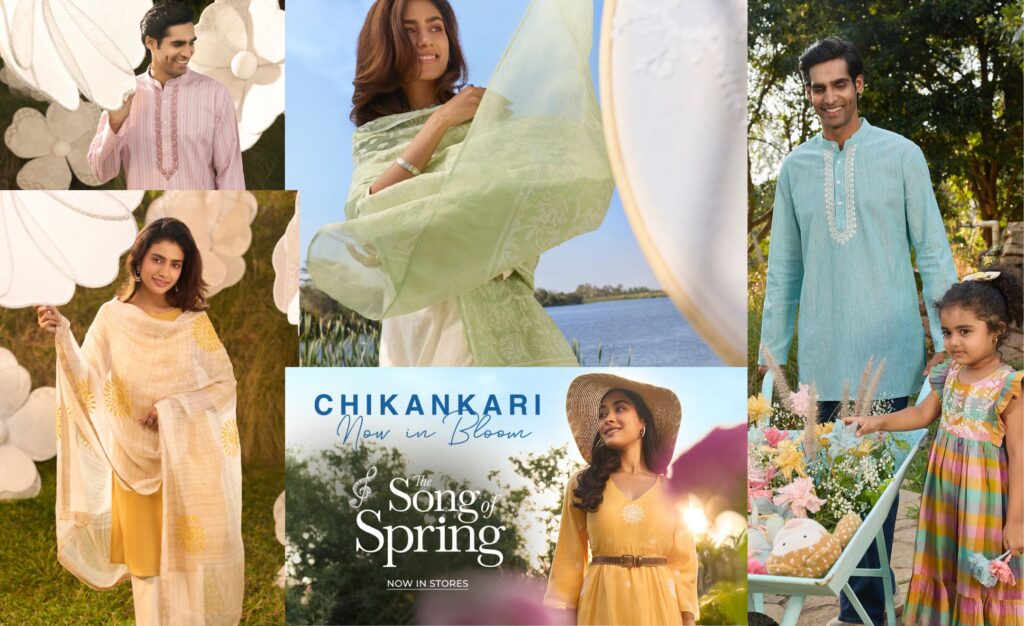
Chikankari has seamlessly blended itself into modern everyday life. Its slow yet growing presence from traditional kurtas and Anarkalis to contemporary short dresses, sarees, crop tops, and jackets shows just how remarkable its versatility is. While a Chikankari lehnga might be the perfect wedding outfit, the same fabric can be stitched into a casual kurta for everyday office wear. It is a craft that refuses to be boxed in.
This refusal to be confined is also visible in the silhouettes Chikankari inhabits. Once closely tied to a specific cultural form, it now moves freely across boundaries from being a showstopper on the runway to an experimental drape. The introduction of mirror work, coloured threads, and layered embroidery has created silhouettes that were once exclusive to particular regions or traditions. The ability of Chikankari to fuse with other techniques shows that it is a tradition capable of evolving without losing its soul, while still staying rooted in its origins.
The Many Fabrics
The embroidery also takes on different forms depending on the fabric used. While cotton Chikankari is perfect for India’s summers, Organza adds structure, sheerness, and contemporary elegance. The organza Chikankari celebrates the perfect blend of elegance and comfort, crafted into a beautifully detailed kurta that is effortlessly versatile. Light and breathable, it works just as well for a hot summer day as it does for party wear, and can even be layered for cooler weather.
The pairing of Chikankari with Kota Doria, a handloom checkered fabric from Rajasthan, results in a light and airy textile that beats the summer heat with style. Similarly, when artisans embroider Chanderi fabric, it acquires a rich texture that is ideal for both summer wear and ceremonial attire.
Each fabric changes the character of the embroidery, shaping how you feel and experience the art.
The Ageless Charm
One of the most democratic aspects of Chikankari is how effortlessly it transcends age. On one hand, it is a six-year-old in a Chikankari frock, looking like a little princess; on the other, a grandmother draped in a vintage Chikankari dupatta, exuding regality. In between, it also finds a place in contemporary silhouettes like flowy dresses, tops, tunics, and even modern co-ord sets. It is the same craft, worn differently across ages and genders, yet all equally valid and undeniably fashionable.
This is a rare phenomenon in the world of fashion. In an era dominated by fast fashion and ever-changing trends, Chikankari has endured far longer than most. It does not concern itself with age or era. It is an art form appreciated across time, generations, and places.
More Than a Chikankari Fabric
Once you have worn a piece of Chikankari, you realise that it is not just a craft. It is a mood, an experience, a way of moving through the values of patience and skill over speed and machine-made products.
When you go to a mall or a shop and choose a Chikankari piece or fabric, you are not just wearing history; you are making a choice about the kind of future you want for our traditional crafts. You are participating in what makes the cultural fabric of the nation.
And maybe that’s why we all need to choose experiences and stories over everything else. Because some crafts deserve you but not all of us deserve the crafts.