

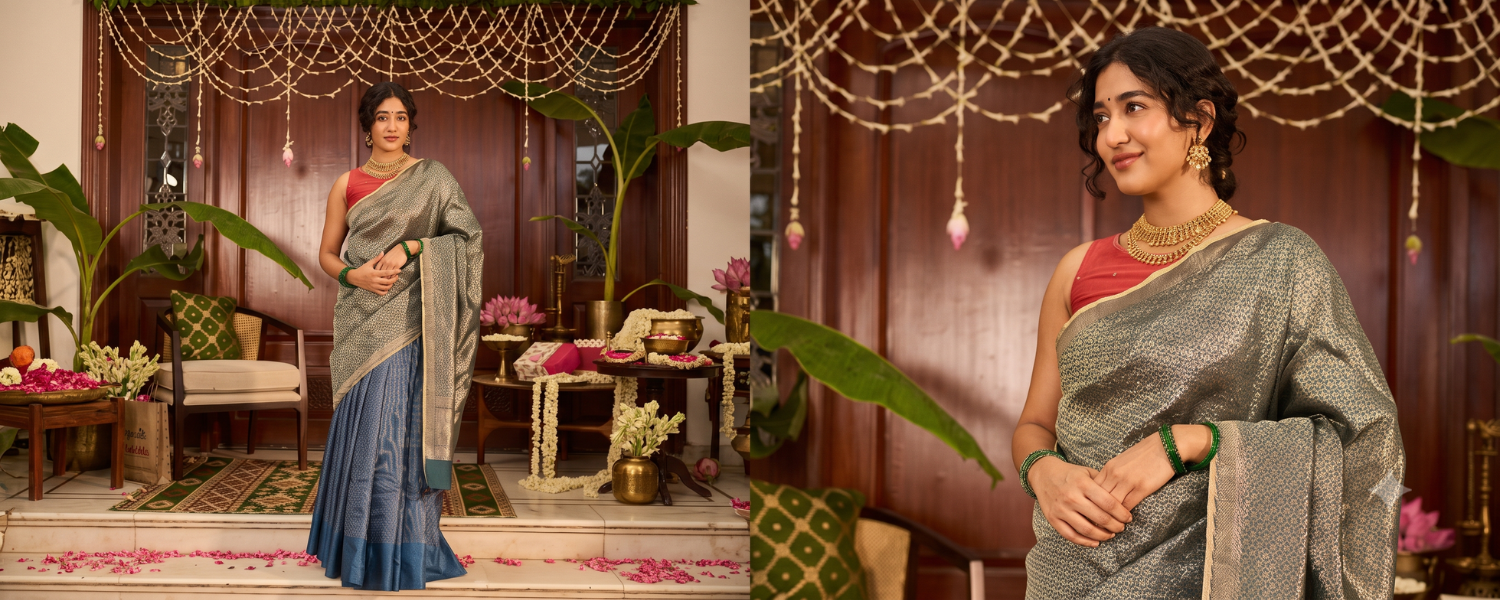


For Bengal, and for Bengalis everywhere, Durga Pujo is the year’s biggest celebration. The city stays awake, the pandals fill, and the saree comes into its own. Pujo dressing has a warmth and a familiarity to it, the red-and-white palette, the crisp cotton mornings, the silk for evenings. In 2026, Durga Puja falls in mid-October, with Maha Ashtami and Maha Navami around 18 and 19 October, leading into Dashami on the 20th.
If you are planning your Pujo looks, here is a guide to the sarees that carry the spirit of the festival, day by day.
The classic laal paar: red-and-white for Ashtami
No saree says Durga Puja like the laal paar, the white saree with a broad red border. It is the image the festival is built on, worn for Ashtami anjali and pushpanjali, and it never looks anything less than right. A crisp cotton or a silk laal paar, worn with a red bindi, red bangles and gold jewellery, is the Pujo look in its purest form. If you own one saree for the festival, let it be this.
Cotton sarees for the daytime
The mornings of Pujo call for cotton. Between anjali, pandal-hopping and long meals with family, you want a saree that stays crisp and lets you breathe. A handwoven cotton saree in a soft colour with a fine border is made for these hours. It’s light and elegant, and it holds its shape through a long day. Keep the jewellery simple and let the weave show.
Silk sarees for the evenings
As the evening pandal rounds begin and the dhunuchi naach starts, the silk comes out. A handwoven silk saree in deep red, ivory, gold or a jewel tone brings the evening the weight it deserves, and these shades look beautiful under the pandal lights. This is the time for your good jewellery and a confident drape.
Sindoor khela: red on the last day
Dashami, the final day, brings sindoor khela, when married women bid the goddess farewell with vermilion and sweets. Red is the colour of the day, worn as a return to the laal paar or a red silk. It is an emotional, joyful, close to the festival, and the dressing matches the mood. A red-and-white saree brings the celebration full circle.
How to drape and accessorise for Pujo
The Bengali drape, the aatpoure style with the pleats brought over the shoulder and a set of keys tied to the pallu, is traditional and worth trying if you have not. If you prefer the regular drape, that is perfectly fine too. Gold jewellery, especially jhumkas, a chik and bangles, is the classic partner, and a big red bindi finishes the look. Keep a light stole or shawl handy for the late nights.
Beyond Bengal: Durga Puja across India
Durga Puja is celebrated well beyond Bengal, and the dressing shifts with the region. In many places it overlaps with Navratri, so festive kurtas, suits and sarees in the day’s colours all have a place. If you are marking the festival outside the traditional Bengali style, a handloom saree or a festive kurta set in a rich shade will serve you well.
Shop the Pujo saree edit at Fabindia
Fabindia’s saree collection has the pieces that make Pujo dressing feel special, the crisp daytime cottons and the handwoven silks for the evening. Explore our cotton and silk sarees and find the drape for your festival.
Frequently asked questions
The classic Durga Puja saree is the laal paar, a white saree with a broad red border, worn especially for Ashtami. Cotton and tant sarees suit the daytime, and silk sarees suit the evenings.
A laal paar is a white or off-white saree with a wide red border. It is the traditional Durga Puja saree, closely tied to Ashtami anjali and the red-and-white palette of the festival.
Sindoor khela takes place on Dashami, the last day of Durga Puja, when married women apply vermilion to the goddess and to each other before her farewell. Red sarees are worn for the occasion.
In 2026 Durga Puja falls in mid-October, with Ashtami and Navami around 18 and 19 October, leading into Vijayadashami (Dussehra) on 20 October.