

In addition to making profits, our aims are constant development of new products, a fair, equitable and helpful relationship with our producers, and the maintenance of quality on which our reputation rests. – John Bissell
For decades, Fabindia has been a staple in the Indian household. We know the smell of the stores, the feel of the hand-loomed cotton, and the distinctive “Fabindia-chic” aesthetic. But have you ever wondered why, in an age of hyper-speed fashion and cut-throat corporate scaling, this brand feels so… different?
It’s because Fabindia isn’t just a retail chain. It is a 65-year-old experiment in something the world is only now beginning to talk about: Inclusive Capitalism.
At the heart of every stitch is a design principle that most MBAs would call “unnecessary,” but we call essential: Kindness.
The Slow Living Movement
We often hear about “Fast Fashion,” but Fabindia is the pioneer of Slow Living. Our founder, John Bissell, believed that a business is only as healthy as its relationships.
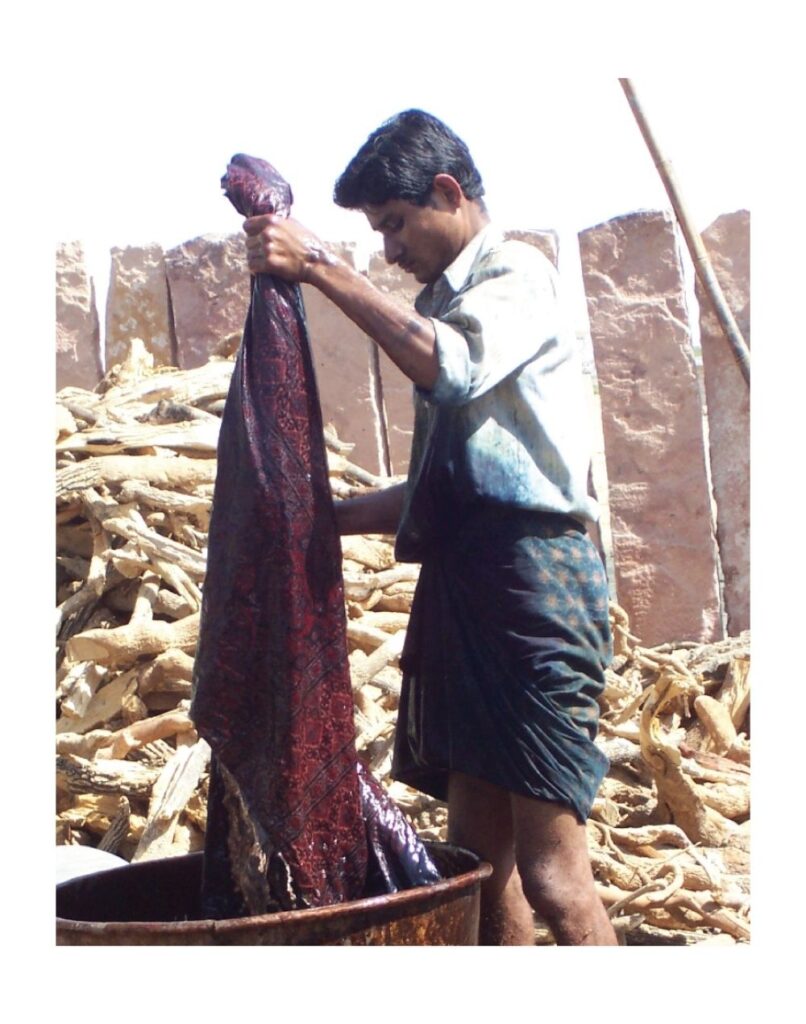
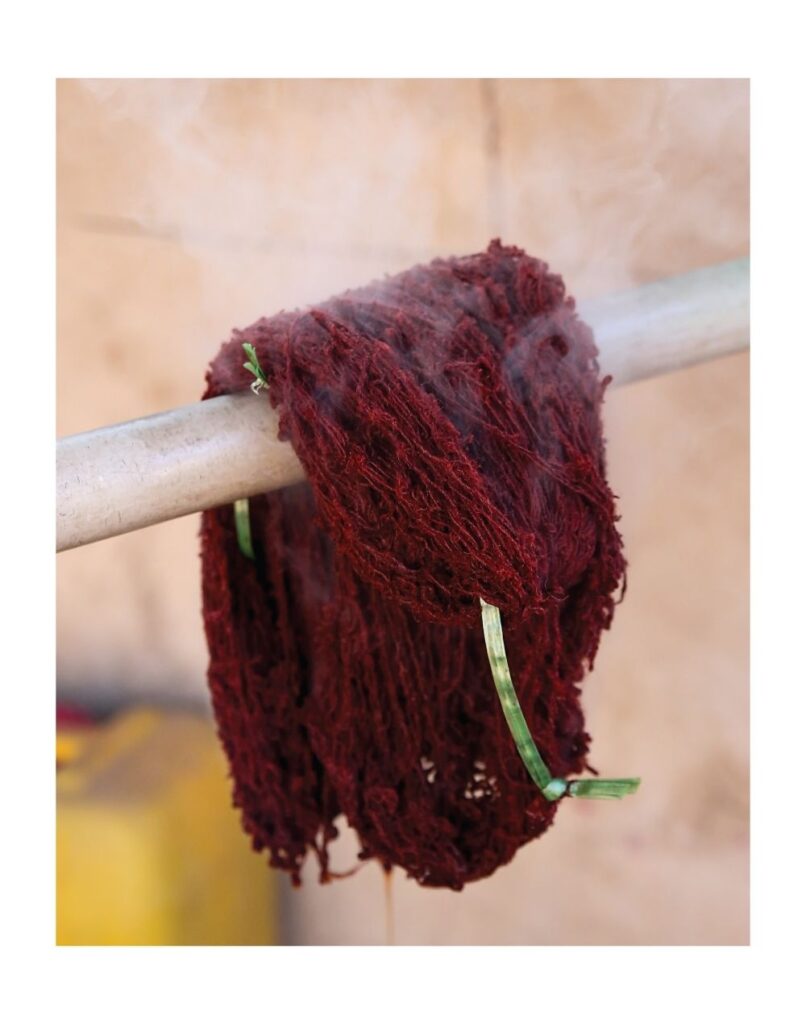
We don’t pressure our producers to meet seasonal trends. Instead, we work with the Earth’s calendar. If a natural dye takes longer to cure because of the monsoon, we wait. If a particular weave requires weeks of intense concentration, we respect that time. This patience is a form of kindness that ensures traditions don’t just survive, they thrive.
The “Fingerprint” of Kindness
In a corporate world that often separates “profit” from “purpose,” Fabindia operates on a different frequency. For many brands, CSR (Corporate Social Responsibility) is an afterthought- a separate department tasked with giving back after the damage is done.
At Fabindia, we don’t have a CSR department. We don’t need one! Kindness isn’t our charity; it is our business model. From the moment a design is visualised to the second a garment reaches your hands, our entire ecosystem is designed to be restorative. Every process is a thoughtful choice for the people and the planet.
Kindness as a design principle means choosing the path less taken:
1. The Human Element: The Pulse of the Product
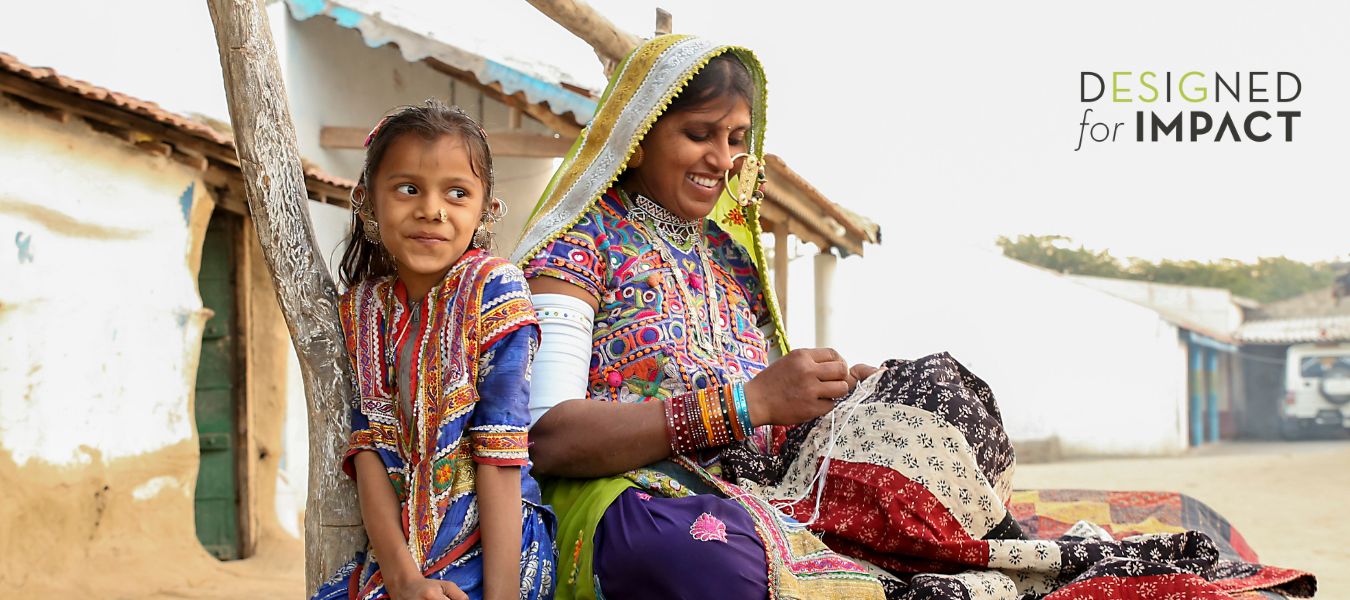
We maximize the “hand-made” element. Whether it’s the rhythmic thump of a hand-loom or the precise pressure of a hand-block print, these processes require a human presence.
- The Energy of the Maker: There is an ancient belief that the artisan’s state of mind is woven into the cloth. By choosing hand-made, we ensure that the rhythm of life, breathing, pausing, and focusing, remains intact.
- The Resistance to Automation: We refuse to let a machine replace a master’s intuition. A machine can mimic a pattern, but it cannot mimic the decision-making of a weaver adjusting the tension of a thread based on the humidity of the afternoon.
- The Economic Lifeline: Beyond the aesthetic, every hand-operated loom represents a deliberate choice to sustain a household rather than a factory floor. It is a design for human survival, ensuring that technology serves the artisan’s hands rather than rendering them obsolete.
2. Material Honesty: The Integrity of the Source
We use natural fibers like Tussar Silk and Cotton because they are kind to your skin and the soil.
- The Biology of Comfort: These fibers are biologically compatible with human skin- they breathe, regulate temperature, and age with grace.
- Kindness to the Soil: Material honesty means thinking about the “afterlife” of a product; a cotton kurta doesn’t sit in a landfill for 200 years, it returns to the carbon cycle.
- The Purity of Process: By stripping away the chemical “finish” of industrial textiles, we allow the raw character of the fiber to speak. It is a commitment to transparency where what you wear is a direct, unmasked gift from the earth.
3. The Beauty of Imperfections
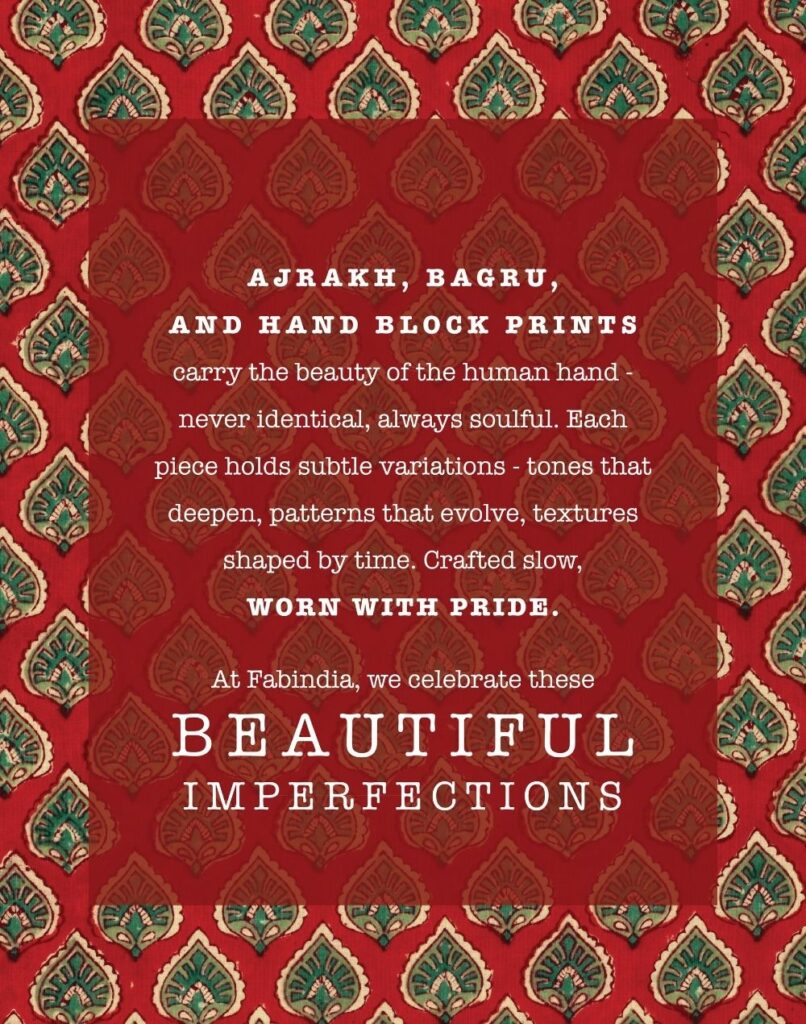
In our world, a slight variation in a block print isn’t a defect- it’s a signature. It’s proof that a human being was there, breathing and creating.
- The Signature of the Hand: When a block-printer strikes a wooden stamp, the pressure is never identical. A tiny smudge or color overlap is a record of a specific moment in time- a “Signature of Existence.”
- The Story of the Artisan: These variations tell you the maker wasn’t a robot; perhaps they were joyful, or perhaps the dye took to the fabric differently that day because the sun shone brighter.
- Embracing the Unique: When you wear a piece with a “variation,” you are wearing the only one of its kind in the world, transforming you from a buyer into a curator of art.
- The Soul of the Artifact: These “errant” threads are the heartbeat of the garment. They remind us that perfection is a machine’s goal, but character is the exclusive domain of the living.
A Legacy of Impact
At the heart of every creation lies a quiet promise, to craft responsibly and consciously. Each product is a reflection of environmental sustainability, made with natural materials and processes that respect the earth. The goal is not just to create beauty, but to ensure that beauty leaves behind no harm.
So, the next time you walk into a Fabindia store, look past the colours and the silhouettes. You are looking at a bridge between rural India’s soul and the modern world’s needs. You are looking at what happens when a business decides that kindness is the most profitable investment of all.