


When you drape a piece of Chikankari, you aren’t just wearing fabric; you are wearing 2,000 years of whispers. From the courts of Persian royalty to the sun-drenched verandas of Lucknow, every stitch tells a story of patience, power, and poetry.
A Mystery in Muslin
Before it was a staple of the modern wardrobe, Chikankari was a riddle. While we often associate it with the medieval times, its soul is much older.
It wasn’t just patterns; they were the ancestors of the delicate white-on-white embroidery we adore today. It’s a craft that survived empires, predating even the Taj Mahal.
Even the word itself is a love letter to cultural blending, rooted in the beauty of Persian language where chikan means embroidery and kari means work.
The Lucknowi Magic
If Chikankari had a heartbeat, it would pulse the loudest in the narrow lanes of Lucknow, the City of Nawabs. Rooted in the centuries-old heritage, this is where the embroidery became more than craft, it became a historical and cultural identity of India, stitched into cloth.
Highly skilled artisans and craftsmen from across the world, creating a rare confluence of talent and technique. It was within this flourishing artistic milieu that intricate and exquisite embroidery of Chikankari evolved, laying the foundation for what would later become Lucknow’s signature craft. The Nawabs of Awadh did not merely patronize Chikankari, but transformed the regional craft into a symbol of national pride.
White-on-White Embroidery
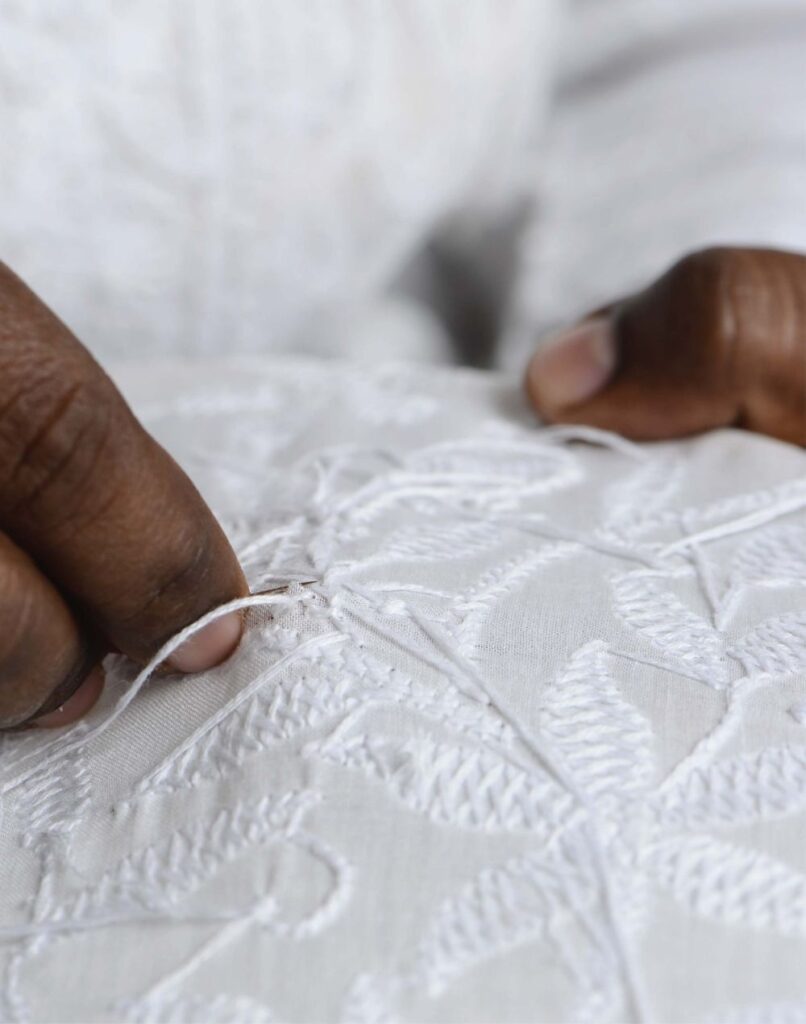
Traditionally practiced on white fabric using white thread, Chikankari was a subtle shift from excess and loud beauty. Referred to as white-on-white embroidery, its charm and sophistication lay in its intricacy rather than ornamentation.
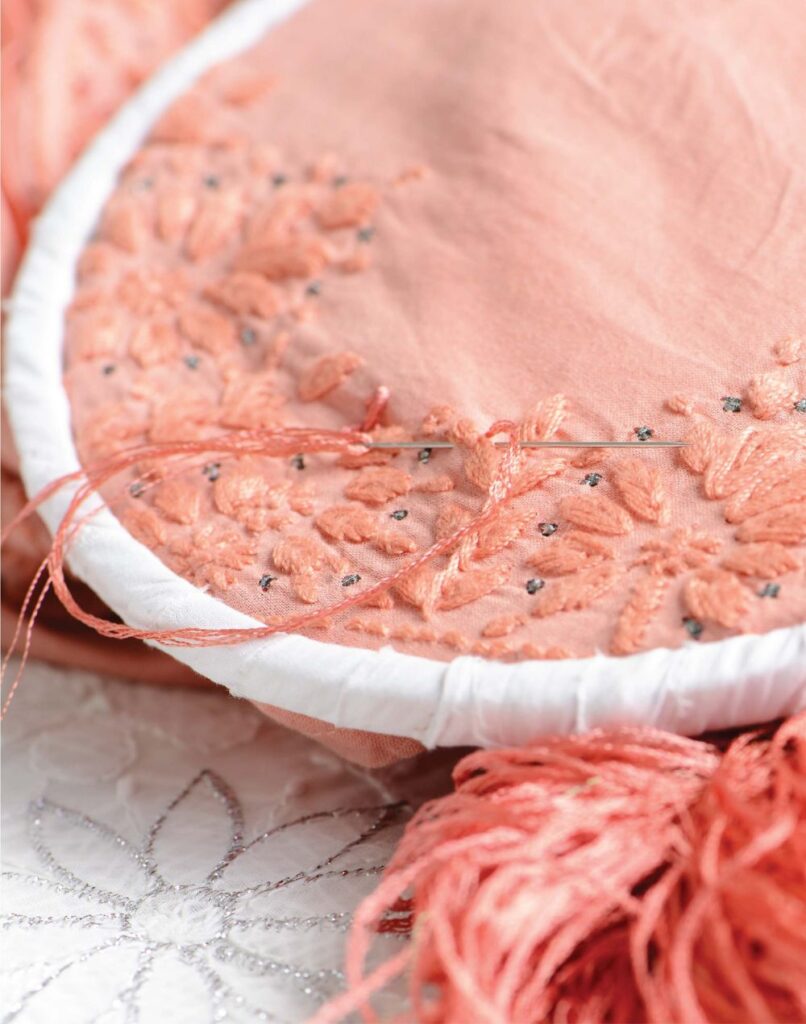
But craft, like all living things, evolves. Over time, artisans introduced changes in both technique and expression. They began experimenting with coloured threads and fabrics, introducing new stitches and expanding the visual language of the craft. Regional variations emerged, with each developing its own character while remaining rooted in tradition.
The Revival
Beauty has a way of finding new admirers. The 19th century marked a significant revival for Chikankari work as British colonial rulers in India were captivated by its delicate craftsmanship. They didn’t just admire it from afar, but wore it, claimed and carried it across oceans. And just like that, the embroidery that once adorned Nawab now graced Victorian drawing rooms. It was a reminder that true art transcends servitude, that beauty recognises no border, and some things belong eternally to those who create them.
In 2008, Chikankari received a significant boost when it was awarded the Geographical Indication (GI) tag. This wasn’t merely a prestigious recognition, but an acknowledgement that Lucknow is the authentic home of Chikankari and the craft should not be imitated and exploited. Authentic Chikankari is always hand-embroidered. While machine-made imitations exist, true connoisseurs can easily spot the difference. Each piece is unique, bearing the subtle signature of the artist’s hand.
Preserving the Legacy
Preserving the authenticity of the craft while allowing it to evolve has been one of the greatest challenges. Yet, Chikankari today stands as a living testament to India’s rich artistic heritage, demonstrating the resilience of traditional crafts and the timeless appeal of handmade beauty. The next time you admire a piece of Chikankari work, whether it is a delicate kurta, an elaborate sari, or a fusion garment, take a moment to appreciate the millennia of history, the generations of artisans, and the thousands of careful stitches that made it possible.
Read about the process of Chikankari with Behind the Stitches: Part 2.