

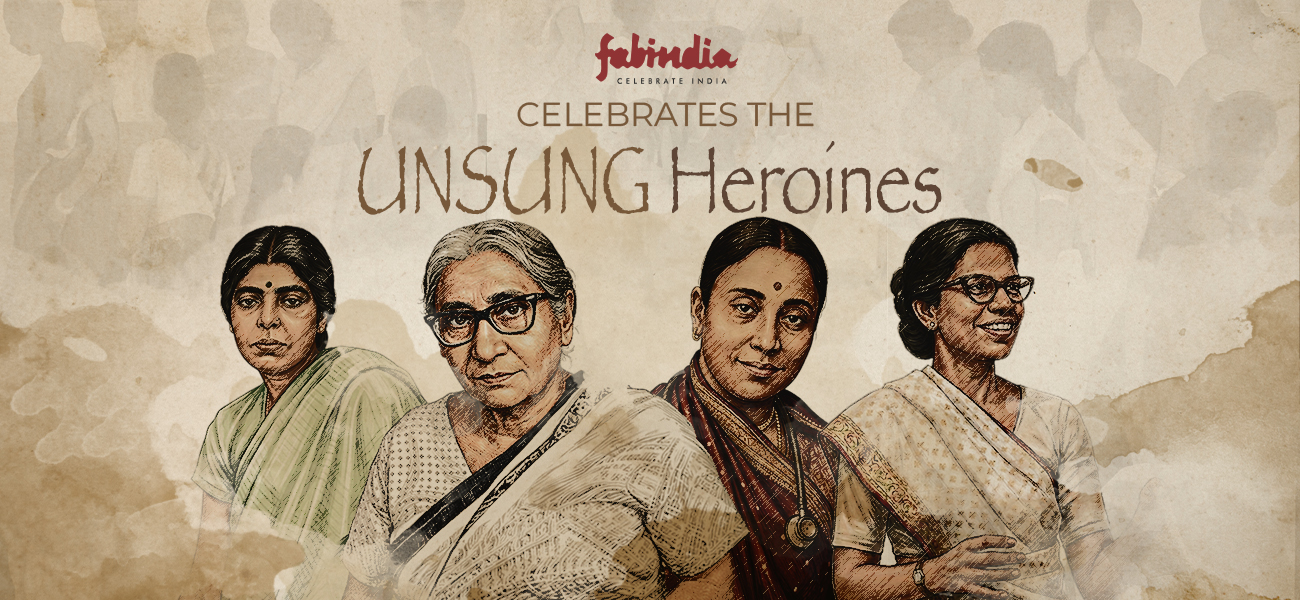

We have celebrated women as an integral part of our society. We have cheered for the freedom fighters who stood at the front lines, the reformers who challenged the rules, the artists who gave voice to the rest of us, the entrepreneurs who built things from nothing, and the leaders who changed the rooms they walked into. Women have done it all- and then some more.
But there is another chapter: women who have shaped the very lives we live today. From laboratories to courtrooms, from Ayurvedic archives to railway stations, they built systems that we continue to benefit from even now. They broke barriers and created new paths for those who followed.
These are women who changed the course of our history, rewrote it, and gave selflessly for the betterment of society. While we may not have read about them in our history books or sometimes fail to fully acknowledge them, their work lives on, telling their stories even today.
Padma Sri E.K. Janaki Ammal– The Woman Who Made India Sweeter
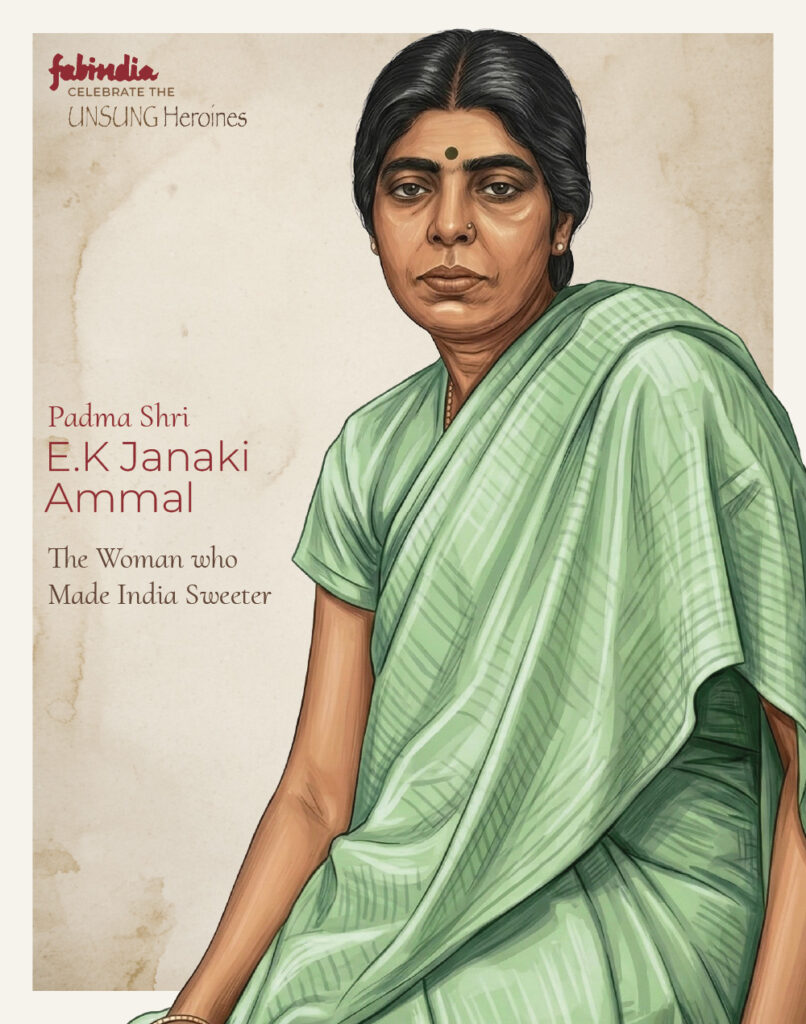
At a time when female literacy in India was below one percent and only a handful of women in the entire country were enrolled in higher education, Janaki Ammal chose the road less travelled. While her sisters were married off one after another in arranged unions, Janaki made a bold choice: she chose science.
She crossed oceans to earn her doctorate from the University of Michigan, becoming India’s first woman to receive a PhD in botany. Her life’s work led her to sugarcane, an essential cash crop, and to solving a crucial question: how could India feed itself without depending on imports?
Through crossbreeding dozens of varieties, she developed high-yielding, sweeter sugarcane hybrids that could thrive in different soils. Her contribution to Indian botany and agriculture lives on even today, helping make India one of the largest producers and exporters of sugar.
Her love for nature, instilled in her by her father, remained strong even in her 80s, when she joined the movement to save Silent Valley (Kerala). Her scientific authority and persistence contributed to the valley being declared a national park in 1984.
She believed that her work would outlive her, and she rarely liked to speak about herself. She was right. The sugar, the forest, the white magnolia at Wisley that blooms every spring in her name, the hybrid yellow rose, a scholarship at the John Innes Centre, and the millions of thankful Indian farmers, all stand as quiet, yet bold testaments to her legacy.
For her monumental contributions to plant polyploidy and conservation, she was honored with the Padma Shri in 1977 and the Birbal Sahni Medal, and she remains immortalized through the Magnolia Kobus ‘Janaki Ammal’ and a national taxonomy award established in her name. To read more about her achievements and awards, visit https://en.wikipedia.org/wiki/Janaki_Ammal#Awards_and_honours
Anna Mani- The Weather Woman Of India
From the cardamom hills of Kerala came a woman far ahead of her time, a woman who recognized the role of the atmosphere long before it became a global conversation, who spoke about climate change before we fully understood or felt its effects.
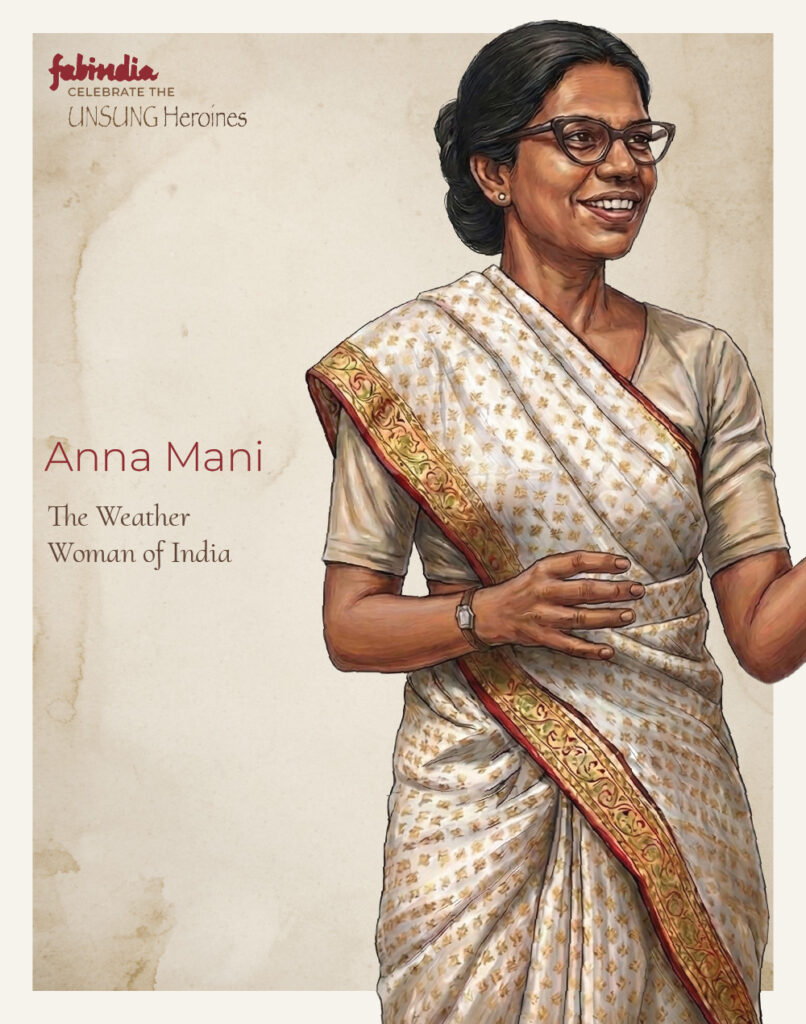
From a childhood devoted to studying encyclopedias to facing the disappointment of not being given authorship on a paper she had worked on, she never gave up. She kept her head high and continued the work that mattered.
She helped India standardize and design over a hundred meteorological instruments, barometers, radiometers, anemometers, and sunshine recorders, so the country no longer had to depend on foreign equipment to understand its own weather. Her invention of the ozonesonde, an instrument used to measure the presence of ozone in the upper atmosphere transformed India’s approach to weather monitoring. In doing so, she built the infrastructure of Indian climate science almost from scratch, one instrument at a time, with a patience that never made headlines.
Anna Mani watched the sky her whole life so that the rest of us wouldn’t have to worry about what was coming.
For her extraordinary scientific leadership and contributions to ozone and atmospheric studies, she was elected a Fellow of the Indian National Science Academy and received the K.R. Ramanathan Medal in 1987, remaining an enduring icon for women in STEM worldwide. To read more about her achievements, visit https://en.wikipedia.org/wiki/Anna_Mani#Honors
Rukhmabai Raut- A True Social Reformer
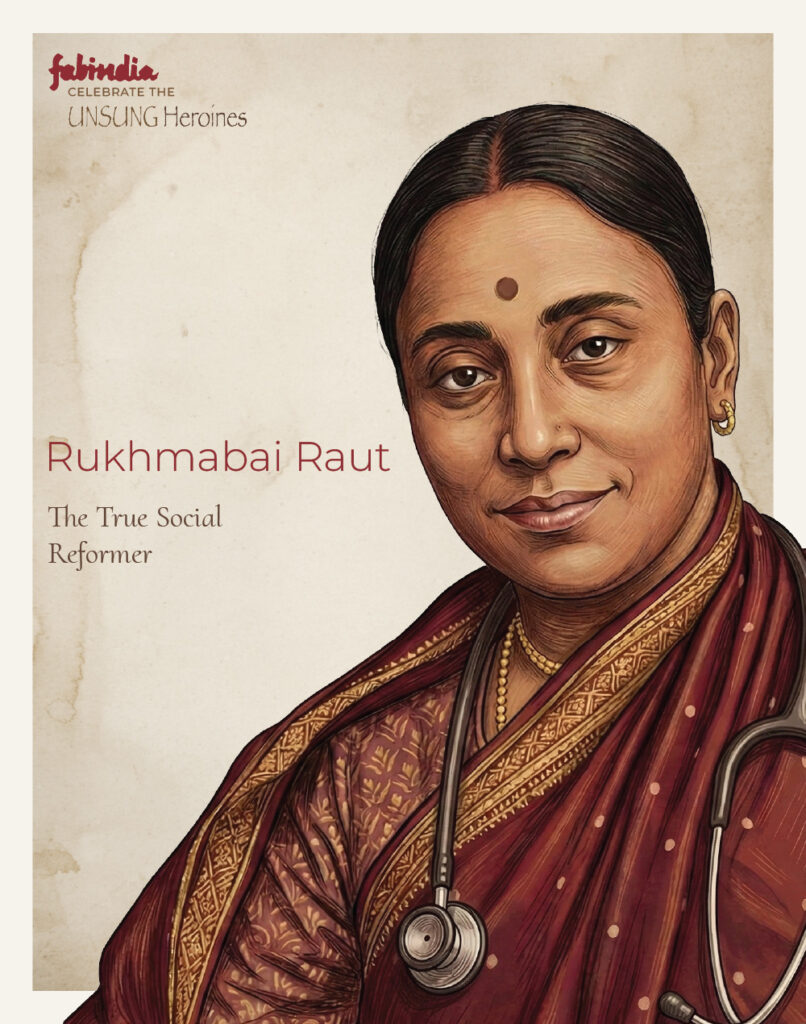
They say that change begins with a lone voice willing to stand firm and refuse to give in. Rukhmabai Raut was one such person. Married off at the age of 11, before she had any say in her own life, she later declined to cohabit with her husband when she came of age.
Her fight became one of the most consequential legal battles of colonial India. Heard in the Bombay High Court, it drew international attention. She refused to remain imprisoned in a marriage she had never consented to and fought with all her might. She wrote to newspapers, made her case publicly, and refused to back down.
The case, which lasted nearly five years, directly contributed to the “Age of Consent Act of 1891”, which raised the age of consent for girls from 10 to 12. While this was a small number, it was nevertheless the change that Indian women desperately needed.
Supported by her family, she found the courage to challenge deeply rooted norms. She refused to look away and went on to earn a medical degree, committing her life to fighting for those without a voice.
Her extraordinary public service and humanitarian contributions earned her the prestigious Kaiser-i-Hind Medal and the title of Lady of Grace of the Order of St. John, while her enduring legacy as a pioneer for women in STEM was celebrated globally with a Google Doodle on her 153rd birth anniversary. Her profound contributions to the chemistry of alkaloids, coumarins, and terpenoids earned her the prestigious Shanti Swarup Bhatnagar Prize in 1961—making her its first female recipient—and the Padma Bhushan in 1975, India’s third-highest civilian honor. Beyond her laboratory success, she was a nominated member of the Rajya Sabha (the upper house of India’s Parliament) and left an enduring academic legacy through her multi-volume work, The Treatise on Indian Medicinal Plants, and her role in establishing the Regional Research Institute at Salt Lake, Kolkata. To read more about her achievements, visit https://en.wikipedia.org/wiki/Rukhmabai#
Asima Chatterjee- The Woman Who Changed The Face of Chemistry
Even as a young child, Asima was fascinated with nature, thanks to her father, who encouraged her to look at it not just as something beautiful, but as something that could also save lives. Her academic rigor and inquisitive nature helped her become the first woman to receive a Doctor of Science degree from a British university in 1944.
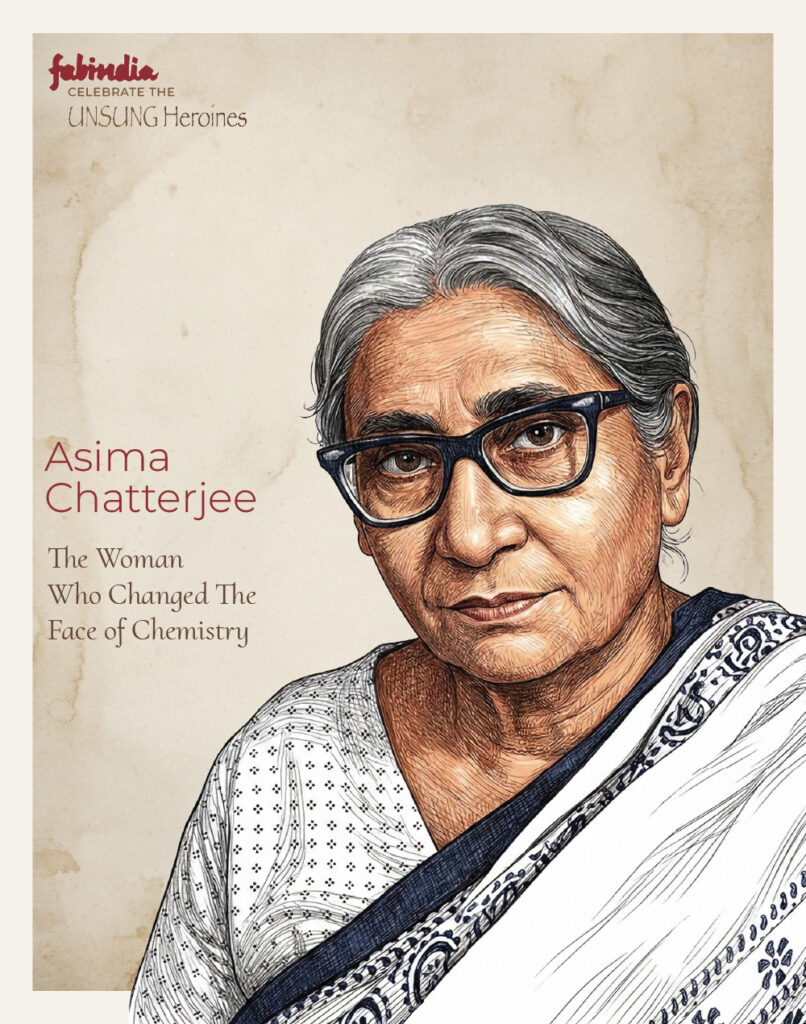
While many chemists at the time focused on inorganic compounds, Asima was drawn to the natural world and worked to bridge the gap between ancient knowledge and modern science. Her research on the chemistry of medicinal plants led to the discovery of anti-epileptic and anti-malarial compounds derived from indigenous Indian flora. She not only became the scientist behind India’s first anti-epileptic drug changing the face of medicinal chemistry in the country but also contributed to the development of vinca alkaloids, which are now used worldwide in cancer treatment.
She was elected a Fellow of the Royal Society, awarded the Padma Bhushan, and became the first woman to serve as General President of the Indian Science Congress. In every sense, she was a pioneer who remained grounded in her roots and demonstrated that India’s ancient healing traditions have a rightful place in modern science.
Her profound contributions to the chemistry of alkaloids, coumarins, and terpenoids earned her the prestigious Shanti Swarup Bhatnagar Prize in 1961- making her its first female recipient. Beyond her laboratory success, she was a nominated member of the Rajya Sabha (the upper house of India’s Parliament) and left an enduring academic legacy through her multi-volume work, The Treatise on Indian Medicinal Plants, and her role in establishing the Regional Research Institute at Salt Lake, Kolkata. To read more about her achievements and awards, visit https://en.wikipedia.org/wiki/Asima_Chatterjee#Awards_and_recognition
Celebrating the Unsung Heroines
As we celebrate Women’s Day, let us honor these unsung heroines, the women who came before us and set the paths we now walk. They were pure givers; the sacrifices they made were investments in a future they would never see.
Today, we are that future.
And this Women’s Day, the most powerful thing we can do is carry their spirit forward.
References:
https://pulitzercenter.org/stories/indias-sugarcane-farmers-struggle-cope-droughts-and-floods
https://www.bbc.com/news/world-asia-india-67634192
https://www.instagram.com/reels/DOQ6NLfiGwR
https://portal.mcgm.gov.in/irj/go/km/docs/documents/D%20Ward/Heritage-Sites/Heritage-20.pdf