
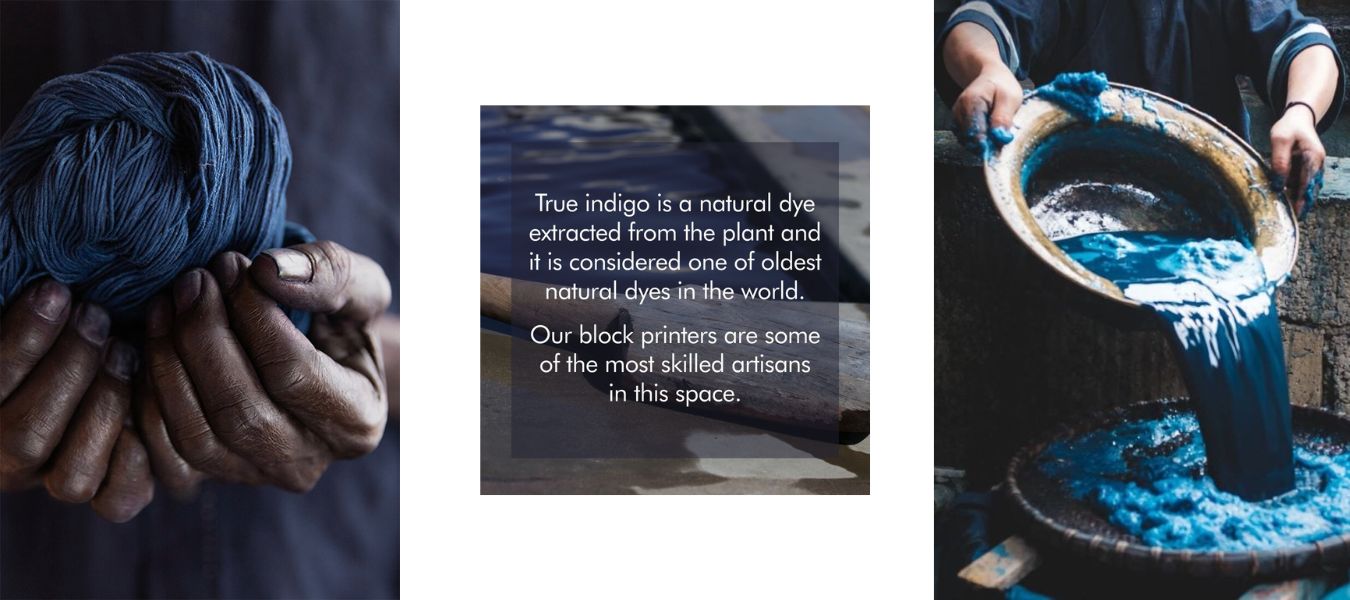

Indigo is not just a colour – it is poetry in shades of blue. Rich, soulful, and enduring, it has travelled through centuries carrying stories of craft, culture, and slow artistry.
What makes Indigo truly special is the way it comes alive. Unlike ordinary dyes that reveal their colour instantly, Indigo unfolds gradually, almost like watching magic happen by hand.
Did You Know?
For centuries, Indigo was considered more precious than gold in parts of the world because of the skill and patience required to create its iconic blue.
The Art of Indigo Dyeing
Indigo dyeing carries a broader perspective rather than just having a technique – it is a slow and thoughtful craft that celebrates patience, transformation, and tradition.
Unlike most dyes, Indigo reveals its beauty gradually, making the process feel almost magical. From the careful preparation of the dye vat to the gradual deepening of blue through repeated dips, every stage carries the touch of the artisan’s skill and intuition.
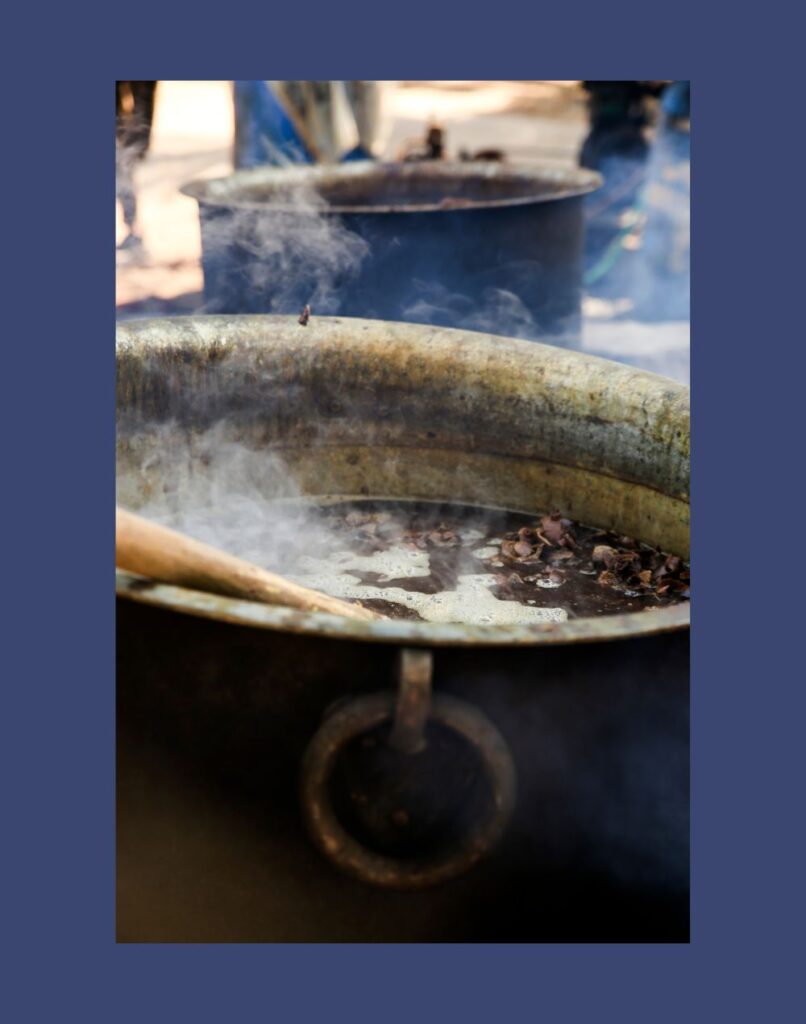
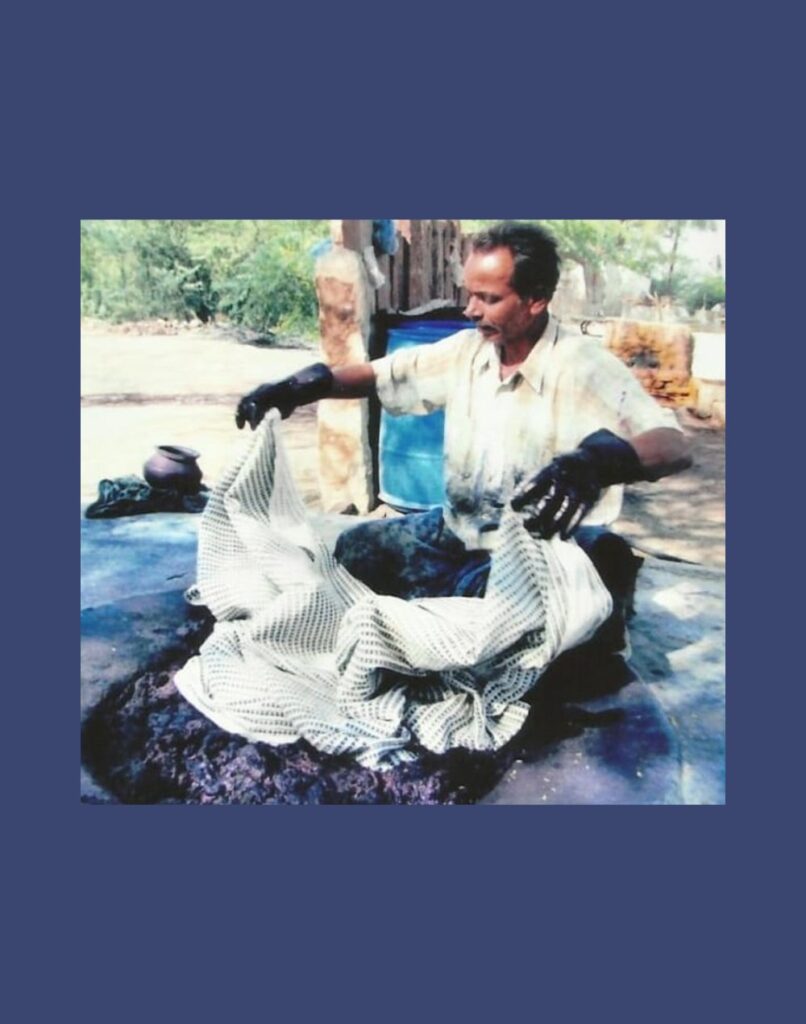
- Preparing the Indigo Vat: Indigo does not dissolve in water naturally, which is what makes the process so fascinating. Artisans prepare a special dye vat where the pigment is slowly transformed using natural fermentation or reducing agents. This stage is delicate and almost alchemical. The vat must be carefully balanced to awaken the dye and prepare it for the fabric.
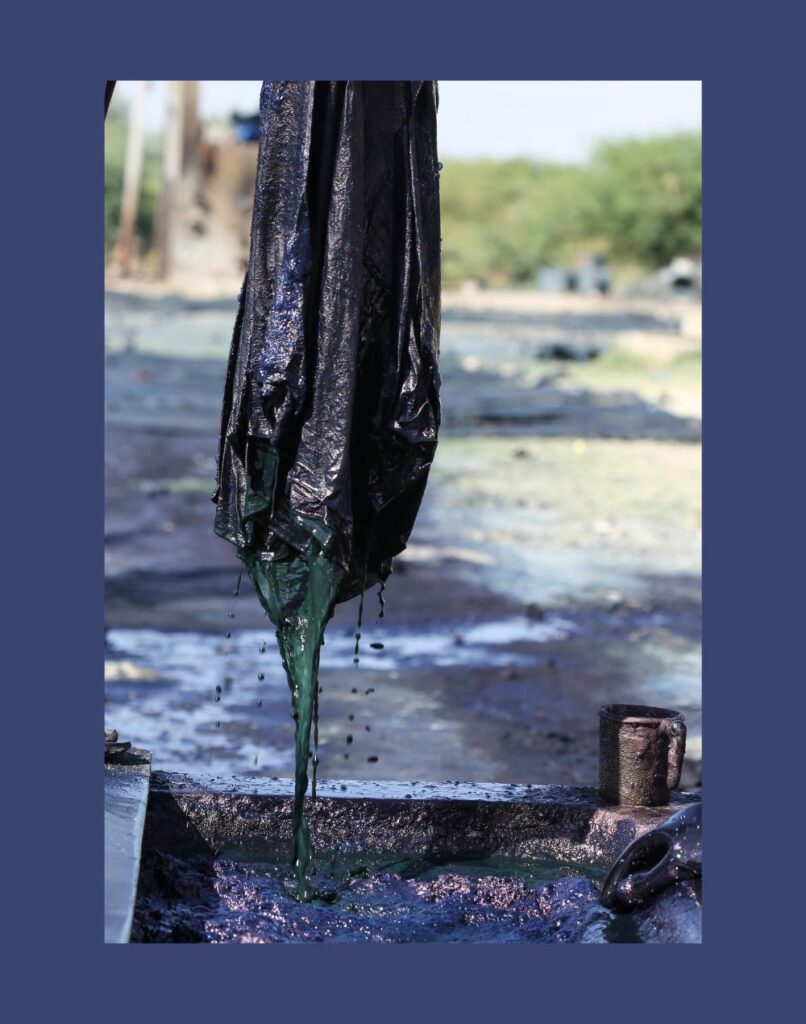
- The First Dip: The fabric is gently dipped into the Indigo vat, where it absorbs the transformed dye. At this point, surprisingly, the cloth does not appear blue at all. Instead, it emerges in soft yellow-green tones, holding the promise of the colour yet to come.
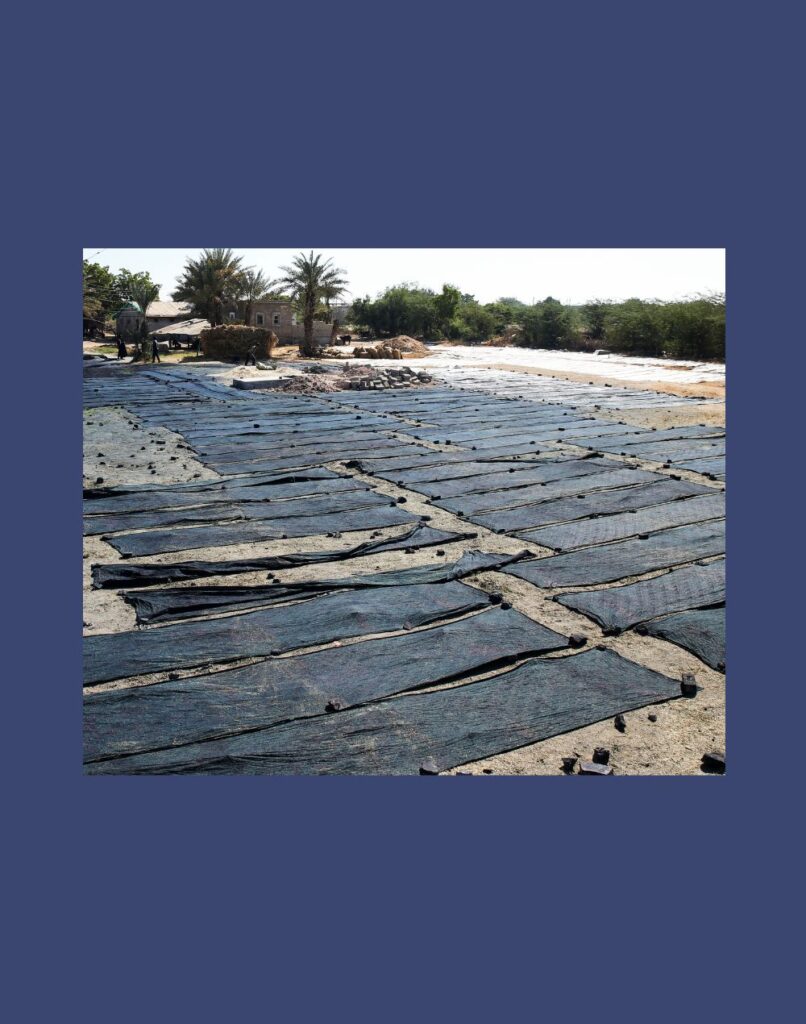
- The Magic of Air & Oxidation: As soon as the fabric meets the air, oxidation begins its quiet transformation. Before your eyes, the colour slowly shifts from green to turquoise and finally into the deep, rich indigo blue we know and love. It is this moment of transformation that gives indigo dyeing its almost meditative beauty.
- Layer by Layer of Blue: To achieve darker shades, the fabric is dipped again and again into the vat. Each layer deepens the blue, creating tones that feel rich, lived-in, and timeless. No two indigo pieces are ever truly identical, each carries the rhythm of the artisan’s hand and the beauty of an organic process.
Indigo Techniques: Patterns Written in Blue
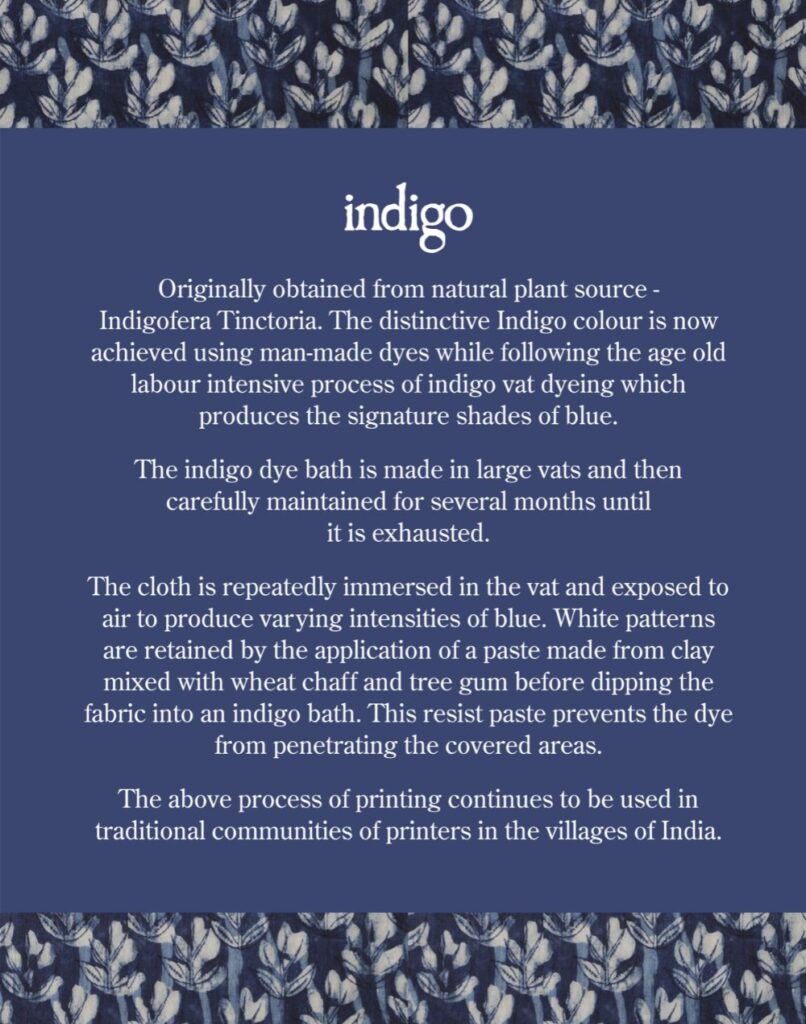
Indigo dyeing is not just one craft, but a world of artistic techniques shaped by different cultures and traditions. From the intricate dots of India’s Bandhani and the flowing wave patterns of Leheriya to Japan’s poetic Shibori folds, every method gives Indigo a new personality.
The beauty of these techniques lies in their unpredictability, no two pieces ever emerge exactly alike. Through each fold, rinse, twist, or layer of these threads/fabric, Indigo translates ordinary fabric into something extremely expressive, carrying artisan’s craftsmanship and rhythm of the process itself.
Why Indigo Still Captivates
Indigo is more than a colour – it is a process, a transformation, and a craft that unfolds over time. Its beauty lies not just in the final shade of blue, but in the journey from plant to pigment to pattern.
Therefore, every season – Fabindia’s classic Indigo collection is represented by pieces that celebrate crafts such as Ajrakh, Ikat, Bagh and Dabu. The collections are distinctive in their print language and contribute to keeping these skills accessible. It is wonderful to see people returning to Indigo for inspiration year after year, and it seems that in keeping with its ancient history, Indigo still rules!
Because true craftsmanship never fades – it deepens, just like Indigo itself.