


When you buy a piece of clothing, you look at the fabric. You check the fit. You look at the mirror. But you completely ignore the quiet element lining the front of your chest that is slowly hurting the planet: the tiny button.
Commonly made of plastic and almost entirely overlooked, buttons are the unsung villains – or heroes – of your wardrobe’s environmental footprint. Today, we’re zooming in on the small things, because real change is in the details.
The Apocalypse of the Tiny: A Half-Trillion Plastics
Buttons seem completely harmless. They are small, light, and inexpensive. But that price comes at a catastrophic cost. The overwhelming majority of the world’s buttons are made from polyester, nylon, and acrylic – which is just a polite way of saying petroleum-based plastic.
Think about the scale.
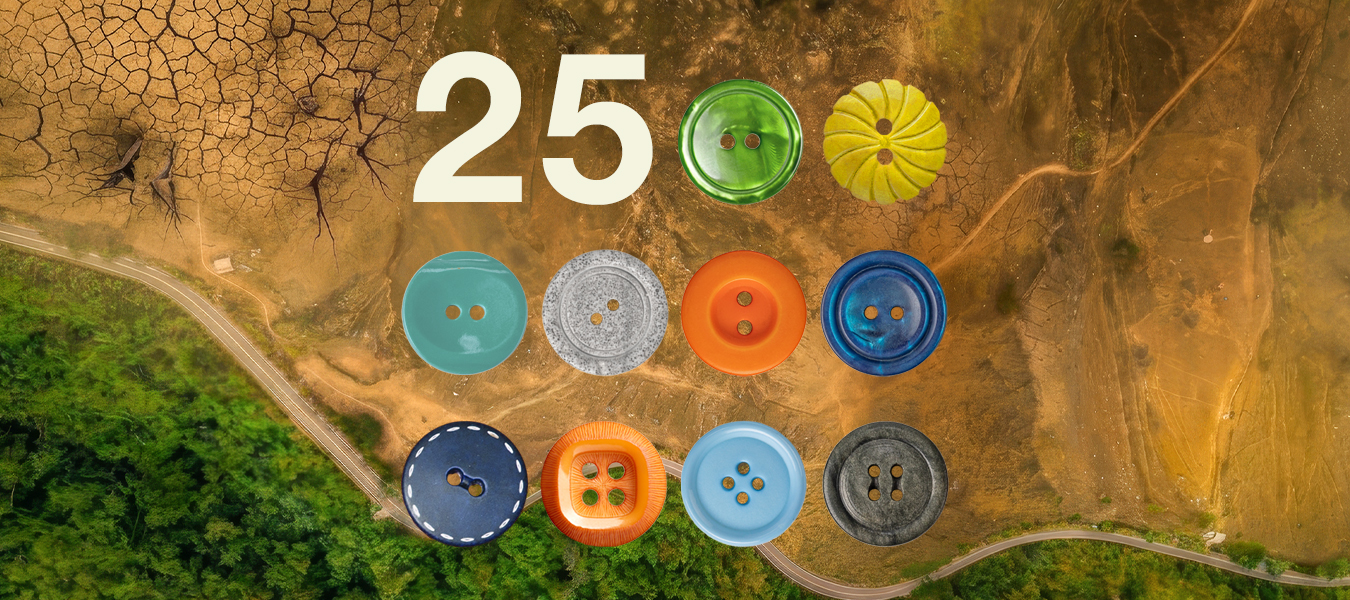
The global fashion industry churns out over 100 billion garments* every single year. If even half of them have an average of just five buttons, that means 25000,00,00,000 ( 25,000 crore / 250 billion) plastic buttons are pumped into circulation annually.
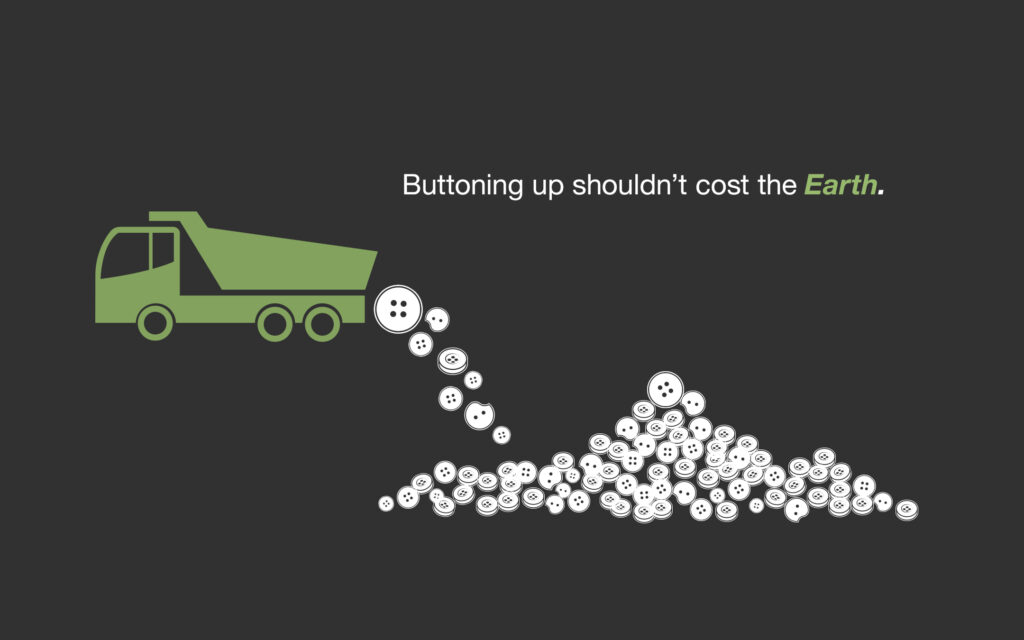
Where do they go? They fall off. They break. They get discarded when a fast-fashion shirt rips. Because they are tiny, they slip through filtration systems, bypass waste management, and head straight to our oceans and landfills.
Did You Know?
The 450-Year* Hangout: Many types of plastics can take up to 450 years to decompose in a landfill.
The Microplastic Threat: Lost buttons are a primary contributor to micro-plastic pollution that slowly degrades into toxic microplastics in our oceans.
The Line in the Sand: A Promise
True sustainability isn’t just about the fabric; it’s a philosophy that must extend down to the very last millimeter of thread. When a button is viewed not just as a fastener, but as a commitment to the earth, the choice becomes clear.
By looking to nature for answers, it is possible to find beauty, durability, and complete biodegradability right in our own backyard.
Craftsmanship from the Earth
Garments can be anchored by materials that give back instead of taking away:
- Mother of Pearl Shells: Responsibly sourced, these discarded, iridescent shells provide unparalleled natural luster and strength without leaving a synthetic footprint behind.
- Upcycled Coconut Shells: A brilliant example of giving waste a second life, tough coconut shells are carved into beautifully textured, sturdy buttons.
When a garment eventually reaches the end of its life, these natural buttons don’t poison the earth. They decay naturally, returning to the soil as nutrients.
Did You Know?
Bright as a Button for a Decade: It takes anywhere from 6 months to slightly over a decade for coconut shells to decompose naturally, depending on the size. Talk about pushing the “plastic” buttons of the industry!
Small Choices, Massive Impact
It is easy to wonder if changing something as small as a button actually matters. Approximately 98% of our buttons are made from natural materials; ranging from Coconut Shells, Wood, Mother of Pearl Shells, Fabric and Metal. Having maintained this dedication for over 5 decades, those millions of tiny buttons compound into our journey of plastic waste prevention. Every single closure becomes a step toward a cleaner tomorrow.
This is Only the Beginning
This World Environment Day, we invite you to look a little closer at your wardrobe. True sustainability means looking at the whole picture – and we are committed to re-examining every single piece of the puzzle.
Buttons are just the start. Every garment is made of countless tiny elements, and we’re on a journey to ensure none of them cost the Earth.
What about the threads that hold the seams together? The tags you snip off? The bags your clothes travel in?
Stay tuned for the next chapter of our “What’s in a…” series, where we unravel the hidden impact of the threads that bind us.
*Sources: