

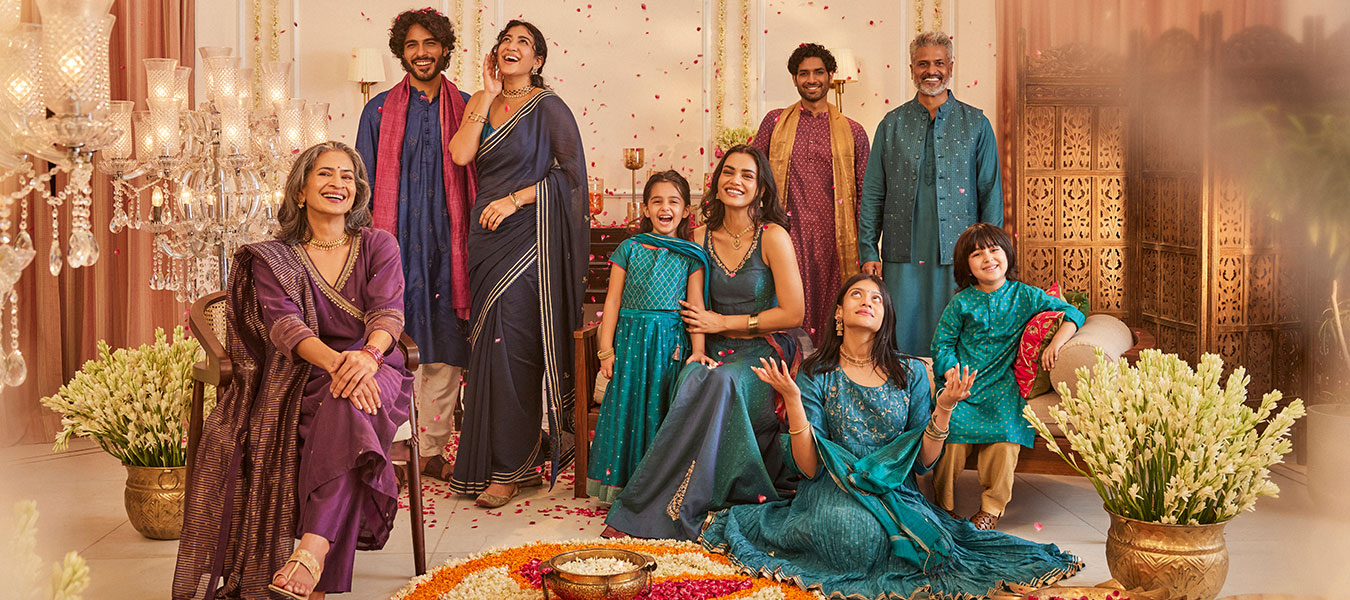


Navratri arrives like a change in the air. The evenings turn cooler, courtyards fill with the sound of dhol and dandiya, and homes across India light up for nine nights in honour of Maa Durga. Part of the joy is the dressing. Each of the nine days carries its own colour, and slipping into that shade has become one of the most loved rituals of the festival.
In 2026, Sharad Navratri runs from Sunday, 11 October to Monday, 19 October, with Dussehra on Tuesday, 20 October. The nine colours, in order, are orange, white, red, royal blue, yellow, green, grey, purple and peacock green. Wearing them is a modern custom rather than a scriptural rule, so treat this as a happy guide and not a set of instructions. Some days you will want to dress up fully for a puja or a garba night. On others, a simple kurta in the day’s shade is more than enough.
Here is the full day-wise list for Navratri 2026, with easy ways to wear each colour in pieces you will reach for long after the festival ends.
The Navratri 2026 colours, day by day
Day 1, 11 October: Orange
The festival opens on a warm, high-energy note. Orange stands for brightness and the fresh start of the nine nights, and it photographs beautifully under evening lights. An orange cotton kurta or a marigold-toned kurta set works for the first day, whether you are heading to a small puja at home or the first garba of the season. Keep the jewellery in gold to lift the warmth of the shade. If a full orange feels like a lot, a printed kurta with orange running through it does the same job.
Day 2, 12 October: White
White brings a quiet, restful mood after the buzz of the first day. It suits a daytime puja or a calmer evening. A white chikankari kurta or a white cotton saree with a fine border feels graceful and cool, and it lets the craft do the talking. Silver or oxidised jewellery sits well against white. Add a pop of colour with a dupatta or a bindi if you want a little contrast.
Day 3, 13 October: Red
Red is the colour most people reach for at festival time, and for good reason. It carries warmth and a sense of occasion. A red saree or a red kurta set is a striking, safe choice for an evening of garba or a family gathering. Gold jewellery is the natural partner here. If you own one good red piece, this is its day.
Day 4, 14 October: Royal Blue
Royal blue is rich without being loud, which makes it easy to wear. It flatters most skin tones and moves well on the dance floor. A royal blue kurta with palazzos, or a blue printed saree, keeps you comfortable through a long evening. Silver jewellery cools the look down and gold warms it up, so you can steer it either way.
Day 5, 15 October: Yellow
Yellow is sunshine in fabric form. It lifts the mood and reads especially well in daylight, so it suits a morning puja or an early gathering. A yellow cotton kurta or a mustard-toned suit feels cheerful and light. Keep the styling simple and let the colour carry the outfit. A pair of jhumkas is all you really need.
Day 6, 16 October: Green
Green signals calm and renewal, and it happens to be one of the most versatile festive shades. Bottle green, emerald and softer sage all work. A green saree with a contrast blouse, or a green kurta set, moves easily from a puja to an evening out. Gold jewellery and a fresh flower in your hair finish it off.
Day 7, 17 October: Grey
Grey is the surprise of the list, and more festive than it sounds. It behaves like a neutral, so you can dress it up with a strong accessory or a bright dupatta. A grey kurta with silver work, or a grey saree with a hint of shimmer, feels modern and understated. This is a good day to let your jewellery take centre stage.
Day 8, 18 October: Purple
Purple lands on Durga Ashtami this year, which for many families is the most important day of the nine. Kanya Pujan often falls on this morning. Purple carries a sense of grace and quiet richness, so it suits the occasion well. A purple silk saree or a purple suit with fine detailing feels dressed-up without trying too hard. Gold or antique-gold jewellery works beautifully against it.
Day 9, 19 October: Peacock Green
The nine nights close on peacock green, a jewel shade that blends blue and green and catches the light. It is celebratory and a little regal, which fits the last day. A peacock-green saree or an anarkali in the shade makes a fitting finale before Dussehra. Statement earrings and a confident drape are all this colour asks for.
How to wear the colours without a new outfit every day
You do not need nine new outfits to enjoy this. A few well-chosen festive pieces will carry you through the week. Mix kurtas with sarees, repeat a favourite in different ways, and lean on dupattas, bindis and jewellery to bring in the day’s colour. A neutral kurta with a coloured dupatta counts. So does a printed saree that carries the shade in its motifs. The point is to feel festive, not to shop for the sake of it.
A simple pairing rule: gold jewellery suits the warm colours like orange, red and yellow, while silver or oxidised jewellery suits the cooler ones like white, blue, grey and purple.
Shop the Navratri edit at Fabindia
From breezy cotton kurtas for garba nights to handwoven sarees for puja mornings, Fabindia’s festive edit has a piece for every day of Navratri. Explore our kurtas, sarees and suits and build a small, thoughtful capsule you will wear well beyond the nine nights.
Frequently asked questions
The nine Navratri 2026 colours, in order from 11 to 19 October, are orange, white, red, royal blue, yellow, green, grey, purple and peacock green.
Sharad Navratri 2026 runs from Sunday, 11 October to Monday, 19 October, with Dussehra (Vijayadashami) on Tuesday, 20 October.
No. Wearing the day’s colour is a popular modern custom, not a religious rule. Follow it for the fun of it, and wear whatever feels comfortable and festive to you.
Gold jewellery suits the warm shades like orange, red and yellow. Silver or oxidised jewellery suits the cooler shades like white, blue, grey and purple.
In 2026 the Ashtami and Navami tithis both fall on 19 October in many Indian cities, so the last two days of Navratri overlap on one date. The colour calendar still runs across the nine listed dates.