

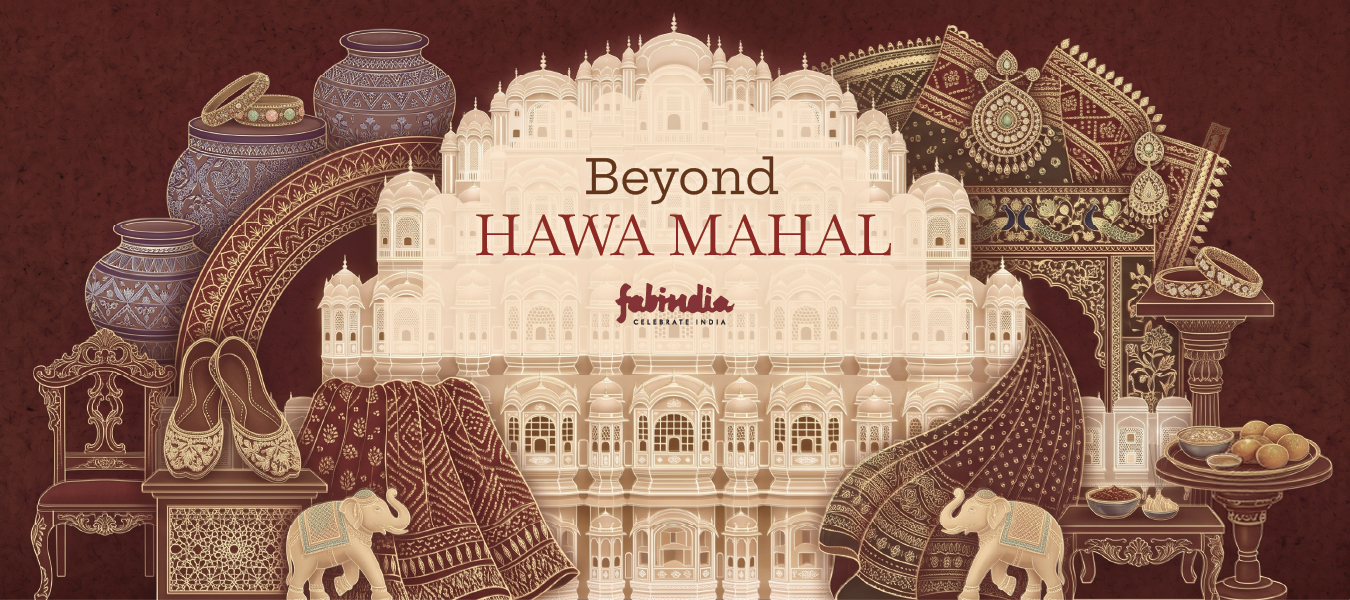


Behind the terracotta pink of Hawa Mahal and the City Palace, Jaipur unfolds like a true poem written in stone, sunlight, and history. It not only breathes as a testament to architectural marvels, but it also lives as a city deeply rooted in culture. It is a city visited by every tourist who wants to understand the pulse of India’s culture.
The Pink City
When Albert Edward, son of Queen Victoria, visited India in 1876, Maharaja Sawai Ram Singh II had the whole city painted pink to welcome him. The colour pink symbolised hospitality, something the city of Jaipur was well-known for.
It is believed that Prince Albert nicknamed the place as Pink City and the name stuck. What began as a gesture, soon became a tradition, so much so that a law was later passed stating that any future buildings in the city must be painted the same colour.
A Landmark with 953 Windows
And in this city stands Jaipur’s most famous pink building, the Hawa Mahal. Built in 1799 using pink sandstone and later pink-washed with calcium oxide paint in 1876, the building was designed by Lal Chand Ustad during the reign of Maharaja Sawai Pratap Singh. This fusion of Islamic and Rajput architectural marvel was built so that royal women could observe everyday life in the city without being seen.
Literally translated as the Palace of Winds, this five-storey structure has 953 windows, or jharokhas, with intricate latticework resembling a honeycomb. Nestled within the busy and bustling streets of Jaipur, the honeycomb wind system keeps the palace ventilated and cool even in the scorching desert heat. Its crown-shaped top is believed to signify the crown of Lord Krishna, earning it the nickname the Crown of Jaipur.
A Handicraft Heaven
A legacy of colour and craftsmanship
The rich cultural remnants of Jaipur can also be witnessed in its varied tapestry of handicrafts. The well-known blue pottery, for example, is a craft that has been practiced since the 18th century, yet still stands strong. It does not use clay and is made from quartz powder, raw glue, sodium sulfate, and multani mitti, fired at low temperatures. The distinct blue colour, blended with Persian influence and motifs inspired by nature is a defining character of this craft and reflects the city’s enduring artistic heritage.
Woven to perfection
Jaipur is known as a rich textile hub, specialising in traditional, high-quality Rajasthani textiles such as block printing, Bandhani (tie-dye) and gota-patti work. These crafts have seamlessly found their way into everyday life as dresses, bedsheets, curtains, and more, making it a living symbol of Rajasthan’s heritage.
Footwear rooted in tradition
When walking through Bapu Bazaar or the markets near Hawa Mahal, do not forget to grab a piece of traditional juttis or mojris. Handcrafted by artisans from durable leather and adorned with intricate embroidery, beadwork, and mirror detailing, these footwear are a fashion statement across the globe.
Jaipur’s diverse offerings
The many shades of colour and versatility of Jaipur’s markets do not merely begin with blue pottery or end with juttis. They extend into the quiet elegance of marble handicrafts, the brilliance of Meenakari and Kundan jewellery, and the warmth of specialised wooden furniture. And oh, how could one forget witnessing the making of lac bangles? These brightly coloured resin bracelets remain central to Rajasthani culture, not just as an ornament, but traditions carried forward.
From Street Eats to Café Seats
And when you finally get tired from all that shopping and feel like treating yourself, Jaipur has some of the best food to offer. From a traditional Rajasthani thali featuring bajre ki roti, lasun ki chutney, boondi, and raita, to the much-loved dal baati churma, the city truly has it all. Don’t forget to stop by the iconic MI Road Lassiwala or savour Rawat ki kachori, especially the famous pyaz ki kachori.
And if you’re someone who likes to go beyond street food, Jaipur’s café culture is just as impressive. From cafés tucked away in quiet neighbourhoods to lively spots around the central Jaipur, this city offers something for every kind of foodie.
A City For All
Jaipur is far more than a city painted pink. It is the feeling of stepping into the past and witnessing the rich heritage of India. From the breeze-filled jharokhas of the Hawa Mahal to the ever-crowded bazaars, every corner of this city is shaped by time and tradition. Whether it is stone carved into magnificent buildings and palaces that stand strong even today, or crafts shaped by hand and heritage, Jaipur is an invitation to live with cultural pride.