

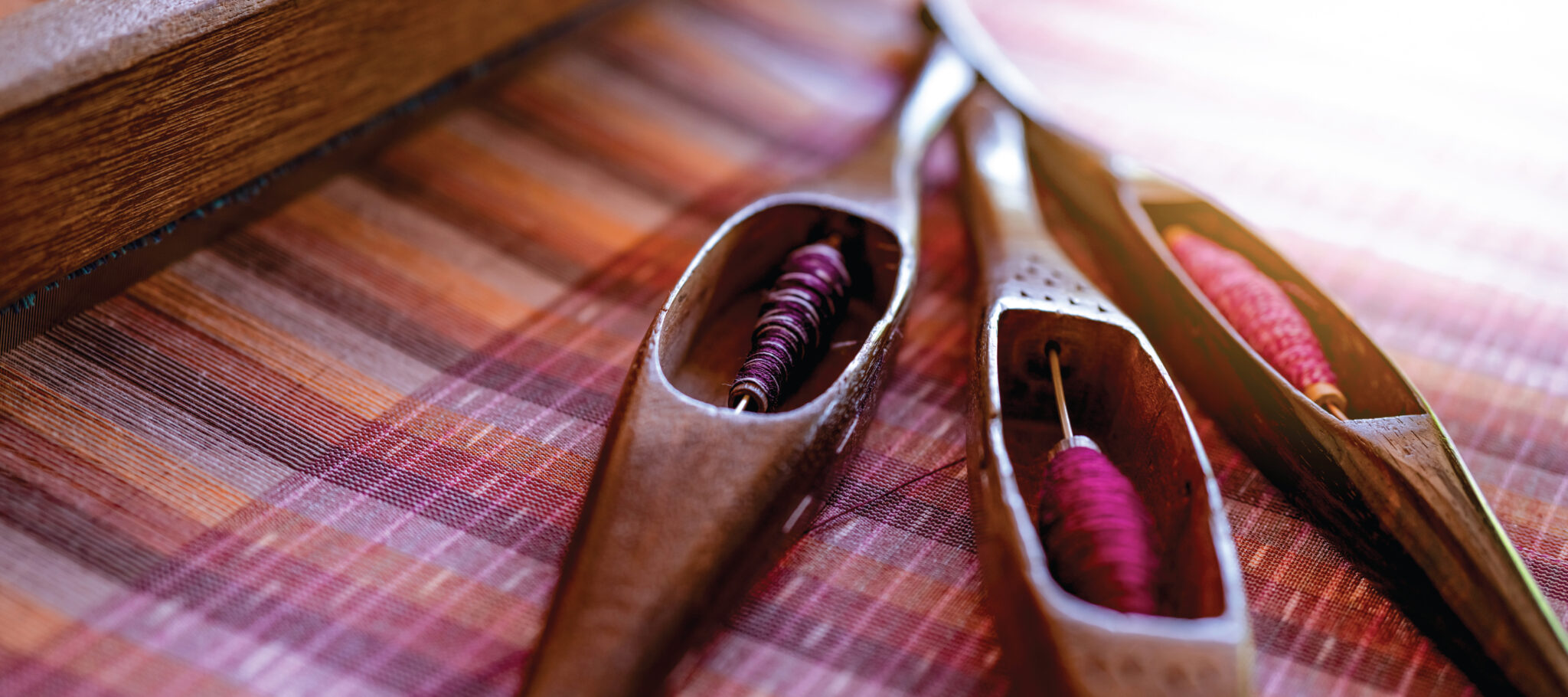

You know that handloom saree that has been passed down through generations, maybe from your grandmother to your mother, and from your mother to you or your partner? It’s not just beautiful; it’s revolutionary.
Back in 1906, when Indians gathered at the Calcutta session of the Indian National Congress, they made the first formal call for Swaraj, or self-rule. This not only shaped India’s freedom struggles for decades to come, but also led to defiance of British rule and its mass-produced goods. It was a call for the revival of indigenous products such as hand-woven textiles that became the very essence of self-reliance and national pride.
Historical Significance of Handloom
When Indians picked the chakra and the handloom over Manchester mill cloth, they were not only choosing a garment, but a tradition that was seeped in history and traded some of the world’s finest textiles. In today’s terms, that decision was a total power move—the equivalent of ditching fast fashion for handcrafted luxury or choosing an artisanal brand over mass-produced hype (except way more revolutionary).
When you run your fingers over hand-woven fabric, you’re touching history. Literally.
The history of Indian handloom stretches back over 5,000 years. We are talking about the Indus Valley civilization, where archaeological evidence has found spinning wheels, weaving tools, spindle whorls, and fragments of cotton textiles. These very tools became symbols of resistance millennia later.
Did You Know?
Even Egyptian mummies were found wrapped in Indian muslin (talk about a timeless look!).
While the development of spinning and weaving began in ancient Egypt, it was India that perfected the art. This Indian handloom has been carried across the border to Egypt, where mummies were found wrapped in Indian muslin, and Rome, where senators coveted Indian silk. The Mughal era also marked a golden age for the Indian handloom and textile industry. By merging together this timeless art with Mughal splendor, Indian handloom became unmatched in quality and artistry.
The Backbone of Rural India
Rooted in tradition, handloom products are breathable, sustainable, and eco-friendly. They also form the backbone of the rural economy by supporting local weavers, creating rural employment, and preserving ancestral craftsmanship. Crafted with care through spinning, dyeing, and intricate weaving, each piece reflects the time, effort, and skill of the artisan, often taking weeks or months to complete.
For rural women, the handloom industry also offers financial independence and dignity, allowing them to work from home and increase their agency at home and in society. The sector acts as an economic multiplier for the entire ecosystem by supporting cotton farms, dye makers, spinners, and traders.
Giving Weavers a Corporate Identity: The Pehchan Scheme
For centuries, the biggest challenge for these rural artisans was their unorganized footprint. Many highly skilled weavers remained unseen in the shadows of middlemen, missing out on social security and direct economic benefits.
To bridge this gap, the Ministry of Textiles launched the Pehchan Scheme.
- A New Identity: The initiative provides weavers with an Aadhaar-linked Pehchan Card, acts as a formal, verified acknowledgment of their craftsmanship. Millions of handloom weavers and handicraft artisans across the nation have been registered under this umbrella.
- Direct Access to Benefits: This national database eliminates intermediaries, allowing cardholders to directly access government benefits like the National Handloom Development Programme (NHDP).
- Financial and Welfare Support: Registered weavers gain streamlined access to Concessional Credit via Mudra Loans, interest subventions, design development workshops, and pension benefits for master artisans under indigent circumstances.
By turning an unorganized legacy into a structured, empowered community, the Pehchan scheme ensures that the hands weaving our history are financially protected and globally competitive.
India’s Handloom Diversity
Travel across India and you will find that the country’s handloom tradition is regionally diverse and geographically rich.
While Chanderi from Madhya Pradesh creates lustrous hand-woven cotton-silk sarees with delicate zari work and traditional motifs, Maheshwar, just three hundred miles away from Chanderi, produces reversible bordered sarees with geometrical patterns.
Murshidabad in West Bengal produces lightweight sarees from pure mulberry silk where Mahabharata and Ramayana scenes come alive on silk. Banaras, on the other hand, produces sarees with intricate designs and heavy gold and silver zari. In the northeastern part of India, Assam contributes exquisite Muga silk sarees that cannot be found anywhere else. Its golden fabric with a natural sheen deepens with age and forms the crux of the state’s traditional Mekhela Chadors.
The Human Touch
What makes handloom remarkable is simple: it is woven by a person, not a machine. No electricity is used in its making, and every thread is crafted with care, precision, and tradition. Handloom is personal. Every slight “imperfection” in the weave is a human fingerprint. A machine can’t replicate the soul of a weaver’s hand.
The use of natural colors and hand-weaving techniques makes these products breathable, sustainable, and eco-friendly, making them prized possessions that are passed through generations as heirloom pieces.
Global Recognition and Revival
Despite the setbacks the Indian handloom industry saw in the early 18th and 19th centuries, India today exports handloom products worth thousands of crores to more than 100 countries.
The world is waking up, and growing global consciousness about sustainability and ethical fashion is fueling its revival on a much larger scale.
Big fashion houses are increasingly adopting Indian handloom as a part of their product lines. From walking the runways of Paris Fashion Week to being chosen by consumers reconnecting with their roots, Indian handloom is reclaiming its place in global fashion and everyday wardrobes.
Your Choice Matters
So the next time you pick up a handloom piece, remember, you’re not just buying fabric. You’re supporting a weaver whose identity is proudly recognized by the nation. You’re preserving a 5,000-year-old tradition. You’re making a sustainable choice. You’re carrying forward the legacy that once helped free a nation.
You’re a part of the story now.