


There is something quietly poetic about fabric that carries the weight of centuries in every thread. In the gentle rhythm of needle and hand, stories unfold without a single word being spoken. Among India’s many textile traditions, chikankari stands apart for its subtle elegance and refined charm. It does not seek attention. Instead, it rewards those who pause and look closer.
Soft muslins, airy cottons, and intricate hand embroidery define a craft that feels both rooted in history and effortlessly relevant today. Chikankari clothing continues to move gracefully across generations, blending heritage with modern style in a way that feels organic. Whether worn for intimate gatherings or everyday ease, it brings a sense of quiet sophistication that never goes out of fashion.
The Origins Of Chikankari
The story of chikankari is most commonly linked to the Mughal era. Many accounts credit Empress Nur Jahan, wife of Emperor Jahangir, with introducing or popularising the craft in India. Known for her refined taste and patronage of the arts, she is believed to have encouraged intricate embroidery styles that celebrated delicacy and detail.
Some historians suggest that simpler forms of this embroidery may have existed earlier in northern India. However, it was under Mughal patronage that chikankari evolved into a highly refined art. The royal courts provided both inspiration and support, allowing artisans to experiment, innovate, and perfect their techniques.
Lucknow And The Rise Of The Craft
Chikankari found its true identity in Lucknow, the cultural heart of Awadh. The city’s appreciation for grace and subtlety shaped the way the craft developed over time.
Artisan communities flourished here, with skills passed down through generations. Much of the work was traditionally done by women, often within their homes, preserving both technique and authenticity. This continuity is one of the reasons chikankari kurtas remain deeply connected to their roots even today.
The Artistry Behind Every Piece
The beauty of chikankari lies as much in its process as in its appearance. Each garment goes through multiple stages before it is complete.
Designs are first printed onto the fabric using hand-carved blocks. Artisans then bring these patterns to life using a variety of stitches such as tepchi, murri, phanda, and jaali. Each stitch adds depth and texture, creating a layered effect that feels both intricate and understated.
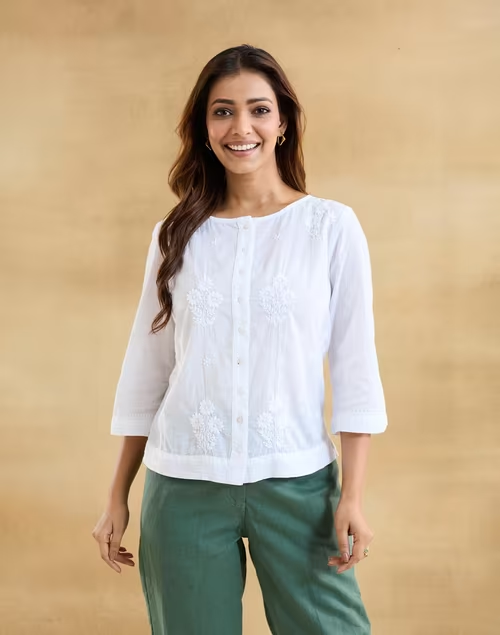
While traditionally crafted on fine muslin, the embroidery now appears on cotton, silk, chiffon, and georgette. This evolution has made chikankari tops more versatile, allowing them to transition easily between traditional and contemporary wardrobes.
From Royal Courts To Modern Wardrobes
What was once reserved for royalty gradually became accessible to a wider audience. During the Nawabi period, chikankari was a symbol of refinement and cultural sophistication.
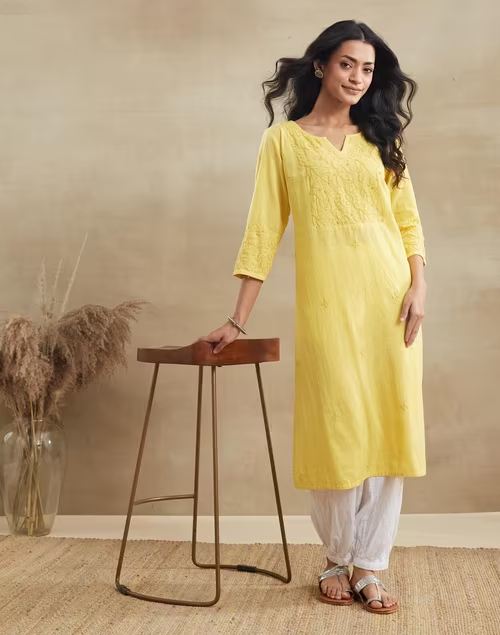
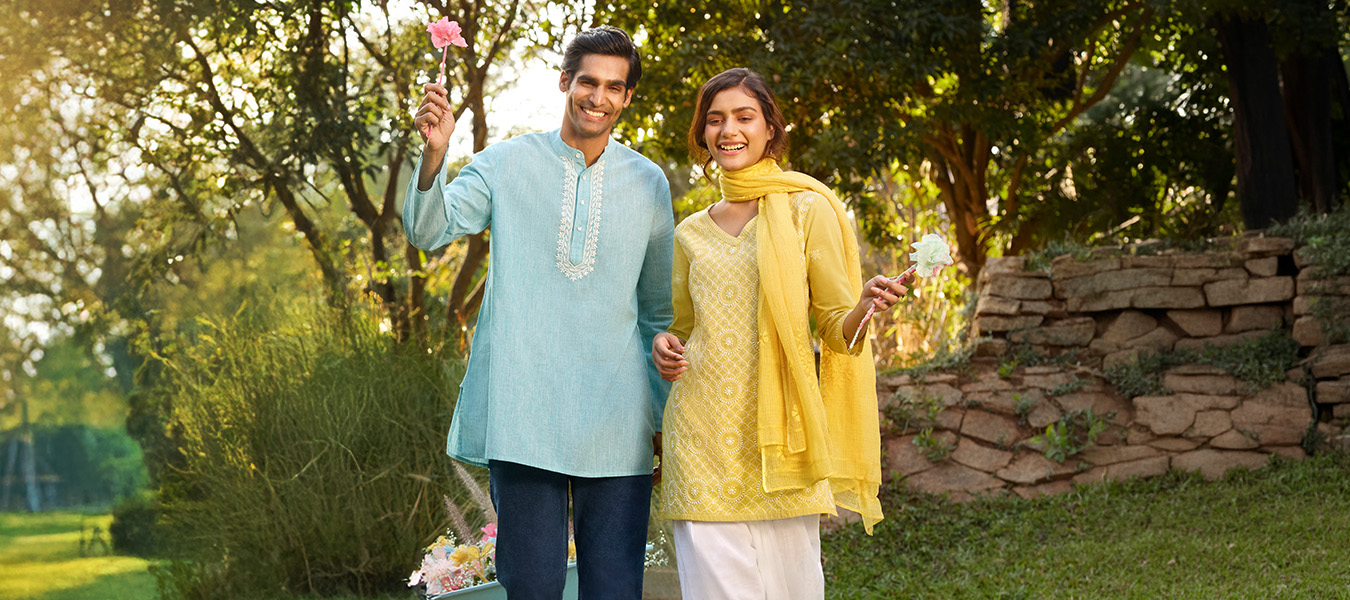
Over time, it moved beyond elite circles and into everyday fashion. Today, chikankari for women is embraced across occasions, from festive celebrations to relaxed daywear. Designers continue to reinterpret the craft, introducing new silhouettes while preserving its essence.
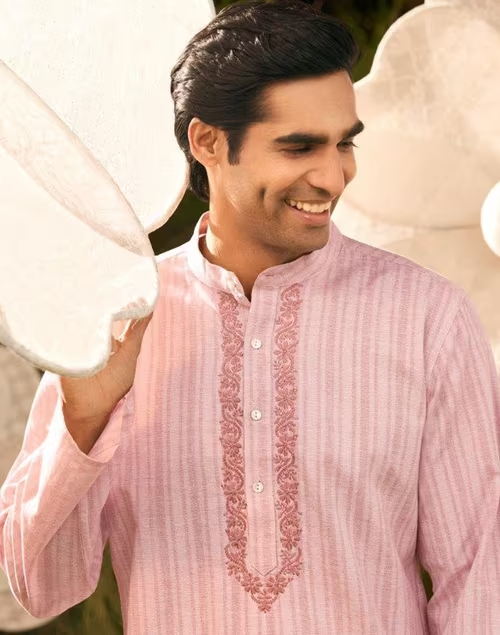
There has also been a steady rise in chikankari for men, with kurtas and shirts becoming popular choices for those seeking understated elegance.
Evolving With Contemporary Fashion
Chikankari has adapted beautifully to changing trends. While its techniques remain unchanged, its expressions continue to evolve. Fabindia has played a monumental role in ensuring that this traditional craft of India not only reaches to the newer generations but becomes an integral part of their fashion statement.
Modern silhouettes such as dresses, co-ord sets, and fusion wear have brought chikankari clothing to a younger audience. At the same time, traditional pieces retain their charm, offering a sense of continuity and cultural connection.
Fabindia’s efforts have not just resulted in a resurgence in love for chikankari across India, making it one of the most sought-after styles, but have also ensured the protection of the craft through a stable source of livelihood to the traditional artisans. Today, thousands of artisans are directly affiliated to Fabindia, working continuously to innovate the timeless in new ways and forms.
In a world driven by fast fashion, chikankari’s handcrafted nature offers something meaningful. Every piece carries the time, skill, and dedication of the artisan. That human touch is what makes it truly special.
Discover Timeless Elegance
If you are looking to add something enduring to your wardrobe, chikankari offers the perfect blend of heritage and versatility.
Explore a range of chikankari kurtas that combine tradition with contemporary fits. Add effortless charm to your everyday style with chikankari tops that feel light and refined. Whether you are looking for chikankari for women or exploring options in chikankari for men, there is something for every wardrobe at Fabindia.
You can also pair your outfits with classics like dhotis, salwars, and churidars to create a look that feels both authentic and modern.
Step into the world of handcrafted fashion and explore the exquisite chikankari collection from Fabindia. It is more than clothing. It is a legacy, stitched with care, waiting to be embraced.